 中文
中文 Email
Email QCloud
 Log in

Quantum Algorithm Application R&D Group Makes Significant Progress on the Physical Correspondence and Quantum Verification of the Riemann Hypothesis
2026/07/01
Recently, the Quantum Algorithm Application R&D Group from the Beijing Academy of Quantum Information Sciences (BAQIS), in collaboration with the International Quantum Academy (Shenzhen), Tsinghua University, and other institutions, made significant progress in the physical correspondence and verification of the Riemann Hypothesis (RH). The research team established the first direct correspondence between Riemann zeros and dynamical phase transitions, thereby uncovering a possible origin of the Riemann Hypothesis within quantum many-body dynamics, and proposed a quantum simulation algorithm framework with quantum advantage. The related findings, titled "The Riemann Hypothesis Manifested in Dynamical Quantum Phase Transitions," were published in Nature Communications on July 1, 2026.
As one of the seven Millennium Prize Problems in mathematics, the Riemann Hypothesis is the cornerstone of modern number theory. Its conjecture regarding the distribution of non-trivial zeros of the Riemann zeta function has long attracted the joint attention of both the mathematics and physics communities. The famous Hilbert-Pólya conjecture once implied that these zeros might correspond to the energy levels of some unknown quantum Hamiltonian. However, due to the lack of efficient and concrete physical evolution models, how to tangibly observe and verify these zeros in controllable quantum physical systems has remained a bottleneck in interdisciplinary research. The true physical realization of the Riemann Hypothesis, its deeper connections, and the exploration of its possible origins remained unknown.
To address this challenge, the research team originally constructed two types of quantum many-body systems and established a direct correspondence between the non-trivial zeros of the Riemann zeta function and dynamical quantum
phase transitions (DQPT) on the time axis. The research shows that by subjecting the system to a specific Hamiltonian evolution, the dynamical behaviors of two key observable physical quantities—the average accumulated phase factor and the Loschmidt amplitude—can perfectly encode the information of the Riemann zeta function. When the evolution time precisely corresponds to the non-trivial zeros of the Riemann Hypothesis, the dynamical signals of these two physical quantities vanish simultaneously and precisely, while the corresponding free energy diverges. This discovery successfully materializes the distribution of pure mathematical zeros into physically measurable dynamical features of phase transitions. This precise correspondence redefines the Riemann Hypothesis as a phase transition that occurs only at a specific temperature.
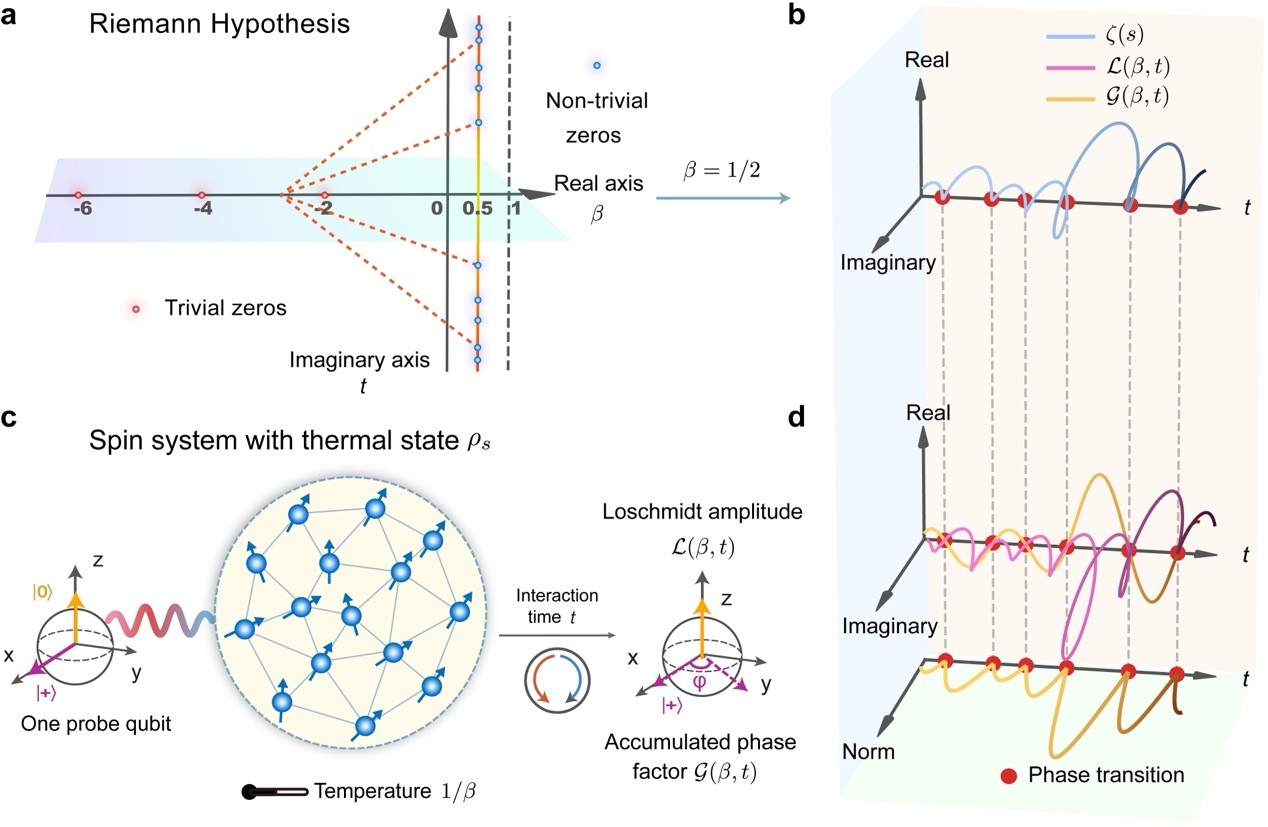
Figure 1. The correspondence between the Riemann zeta function and engineered quantum many-body systems.
To scale up this scheme, the research team further proposed a digital quantum simulation framework. This architecture can efficiently implement the two types of quantum systems using polynomial quantum resources, providing a scalable path for verifying the Riemann Hypothesis on universal digital quantum computers, and demonstrating a potential quantum advantage over classical methods.
As a proof-of-principle experimental verification, the research team constructed the first type of quantum many-body system on a five-qubit nuclear spin quantum processor. By precisely controlling the energy level distribution and driving the evolution of the interaction Hamiltonian, they successfully observed the aforementioned physical correspondence and clearly captured the dynamical coherent signals matching the characteristics of the first five non-trivial zeros of the Riemann Hypothesis.
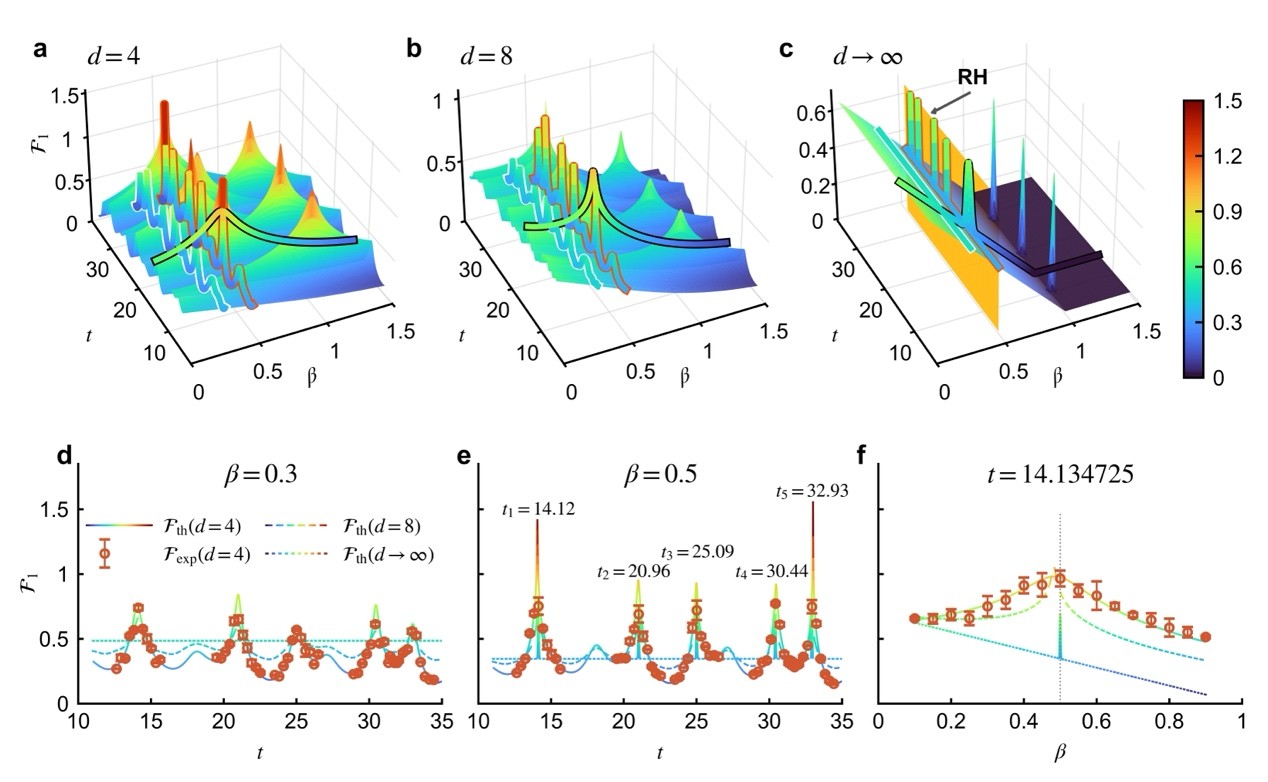
Figure 2. Changes in free energy over time and temperature. The Riemann Hypothesis (RH) can be explained as a phase transition that occurs only at a specific temperature.
This research not only reveals a deep logical connection between hard problems in number theory and non-equilibrium quantum many-body physics, but also establishes a new paradigm for quantum computing as a powerful tool to explore major conjectures in pure mathematics.
The first author and co-corresponding author of the paper is Shijie Wei, Associate Researcher at BAQIS. The paper's first authors also include Quanfeng Lu, a PhD student at Tsinghua University, and Yue Zhai, a PhD student at the International Quantum Academy (Shenzhen). The corresponding authors are Tao Xin, Researcher at the International Quantum Academy (Shenzhen), and Gui-Lu Long, Vice President of Research at BAQIS and Professor at Tsinghua University. Collaborators of the paper also include Professor Franco Nori from RIKEN, Japan, and Wentao Yang, a PhD student at Tsinghua University. This work was supported by projects including the Beijing Nova Program and the National Natural Science Foundation of China.
Original Link: https://www.nature.com/articles/s41467-026-74935-8