 中文
中文 Email
Email QCloud
 Log in

AI Quantum Group Reports Significant Progress in Non-Equilibrium Criticality-Enhanced Quantum Sensing
2026/06/30
Recently, AI Quantum Group at the Beijing Academy of Quantum Information Sciences (BAQIS), together with the University of Electronic Science and Technology of China, the Institute of Physics, Chinese Academy of Sciences, and other collaborators, has proposed and experimentally demonstrated a quantum-enhanced sensing scheme based on a superconducting qubit computing platform. The team implemented a Stark-Wannier localization platform in which a linear gradient field competes with excitation tunneling, thereby combining the high parameter sensitivity associated with quantum criticality and the time-domain resource provided by non-equilibrium dynamics. With only computational-basis measurements a a joint time-domain Bayesian estimation protocol, the scheme achieves quantum-enhanced sensing over an extended parameter regime and realizes precision scaling with evolution time close to the Heisenberg limit. On June 30, 2026, the work, titled Non-equilibrium criticality-enhanced quantum sensing with superconducting qubits, was published in Science Bulletin and selected as a cover story.
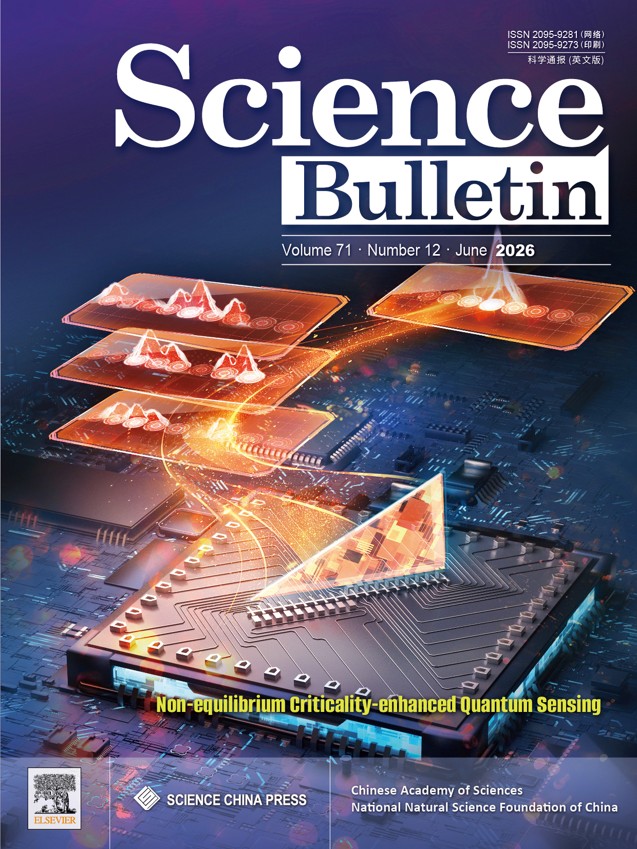
Figure 1. Science Bulletin cover image featuring the work.
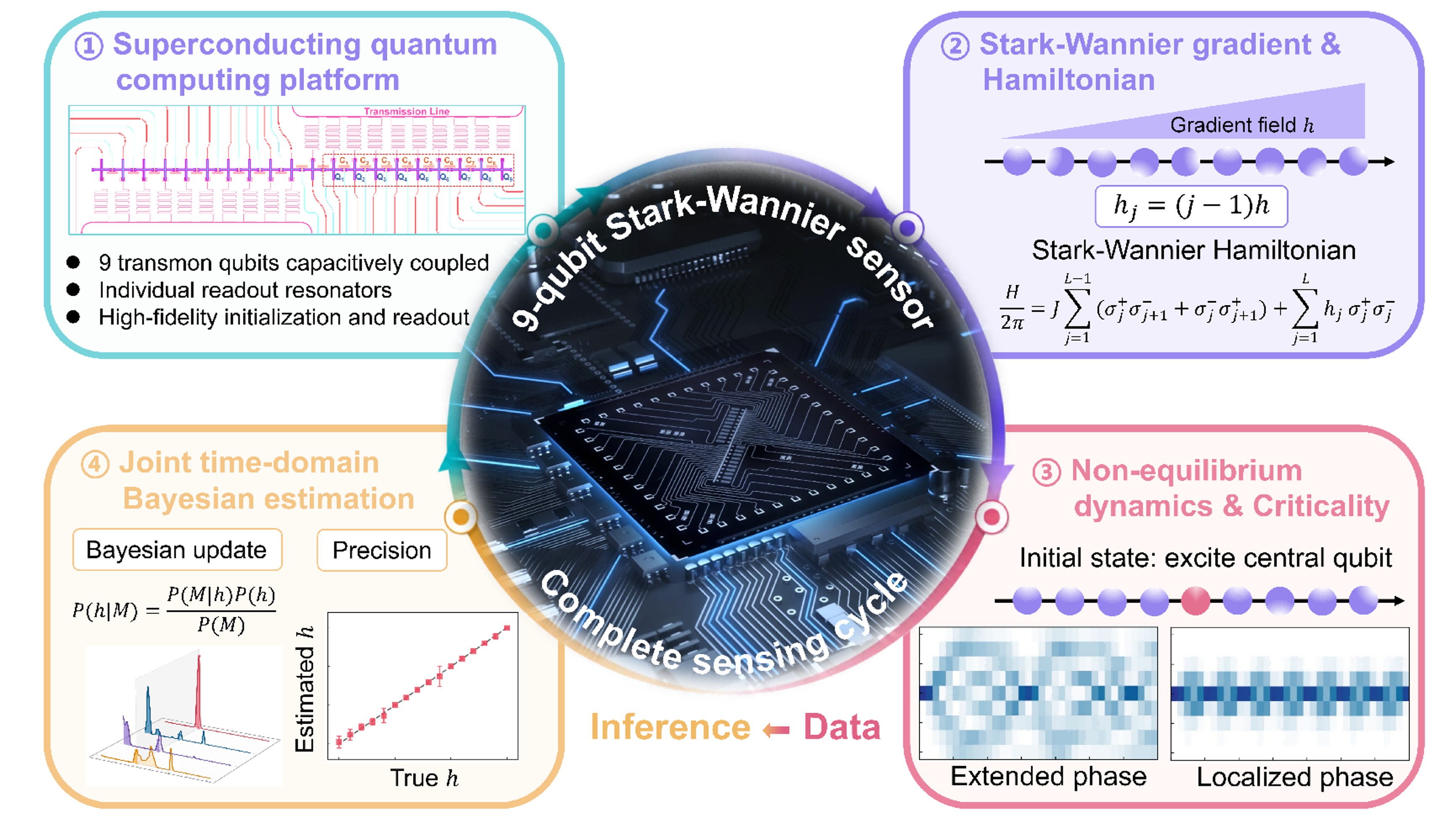
Figure 2. Framework of the quantum-enhanced sensing scheme.
Quantum sensing seeks to estimate external parameters with a precision beyond classical limits by exploiting quantum resources such as superposition, entanglement, many-body correlations, and coherent dynamics. In many quantum-enhanced sensing protocols, the estimation variance can improve super-linearly with the size of the probe or with the interrogation time, and in ideal cases can approach Heisenberg scaling. Existing approaches have followed several routes: preparing entangled probes, using the strong response of many-body systems near quantum criticality, or harnessing non-equilibrium evolution so that time itself becomes a sensing resource. In near-term hardware, however, these advantages are often constrained by decoherence, noise, narrow working parameter windows, and the need for complex state preparation or optimal measurement bases.
The central idea of this work is to make these resources work together in an experimentally accessible setting. The researchers used a superconducting quantum circuit to build a nine-qubit Stark-Wannier quantum sensor (Figure 3). In this platform, the ratio between the tunneling strength and the applied linear gradient field tunes the system from an extended phase, through a critical regime, into a localized phase. Because the gradient field directly reshapes the propagation pattern of quantum excitations, the resulting dynamics encode information about the field strength.
Experimentally, the team prepared a single excitation at the center of the nine-qubit chain and let it evolve under a controlled gradient field. The excitation population on each qubit was then measured in the computational basis as a function of time. Depending on the gradient-field strength, the system displayed qualitatively different transport behavior: extended propagation across the full chain, system-wide Bloch oscillations near the transition region, and confined oscillations in the localized phase. These spatiotemporal population patterns provided the data from which the external gradient field was inferred. The results show that the critical regime associated with the extended phase delivers better sensing performance than the noncritical localized regime, demonstrating the contribution of quantum criticality to enhanced precision.
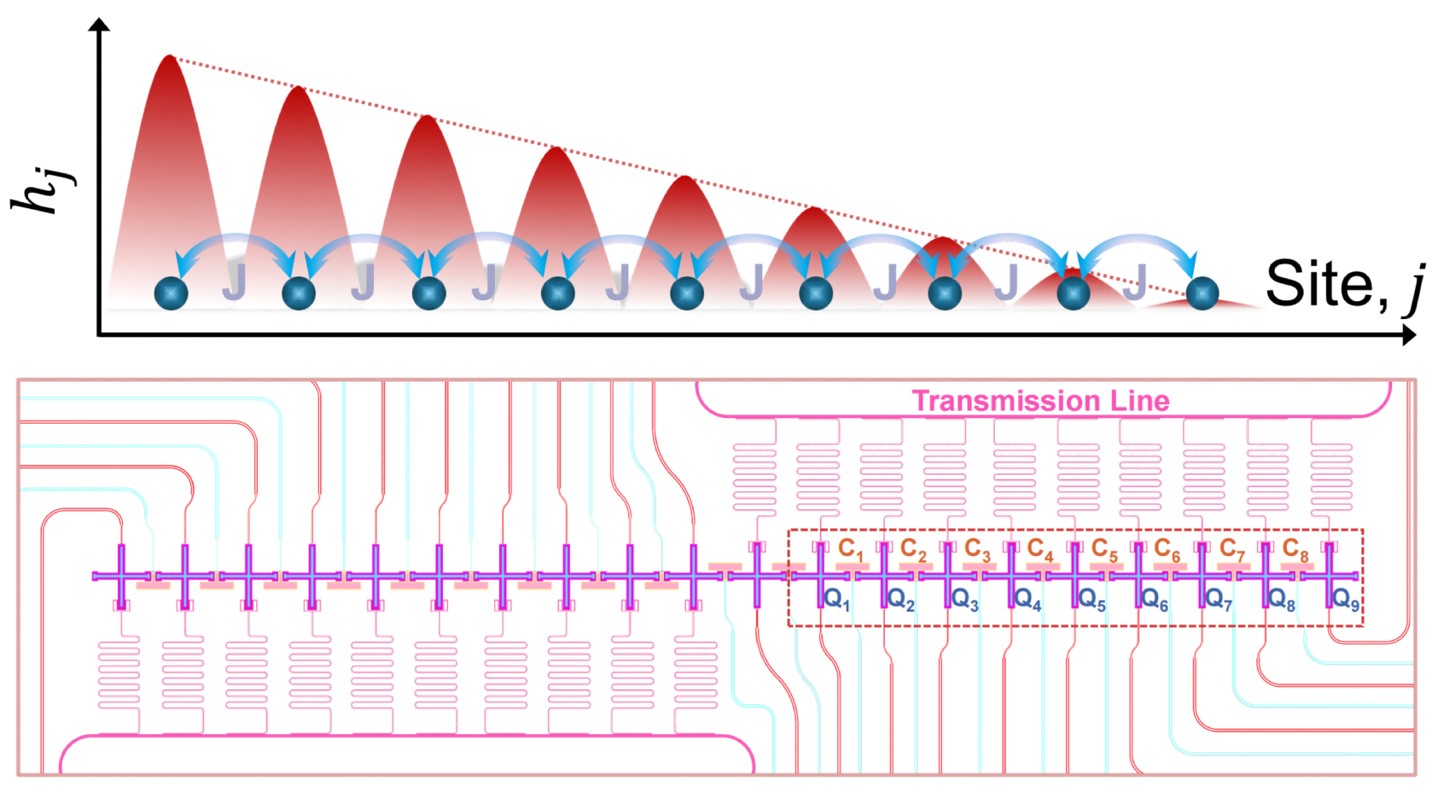
Figure 3. Stark-Wannier gradient field and superconducting qubit chip layout.
A further challenge in criticality-enhanced sensing is that optimal measurements can be difficult to implement and may depend on both the unknown parameter and the evolution time. To avoid this bottleneck, the team developed a joint time-domain Bayesian estimation method (Figure 4). Instead of estimating the field from a single evolution time, the method combines measurement outcomes collected at several distinct times to construct a posterior probability distribution. This joint inference suppresses the multimodal ambiguity that can appear in single-time estimation and yields a more accurate and robust estimate with a finite number of samples. Even with simple computational-basis measurements, the protocol achieves near-Heisenberg-limited precision scaling in the time domain. The team further verified the method in the double-excitation subspace, indicating that the approach can be extended to richer quantum many-body probes.
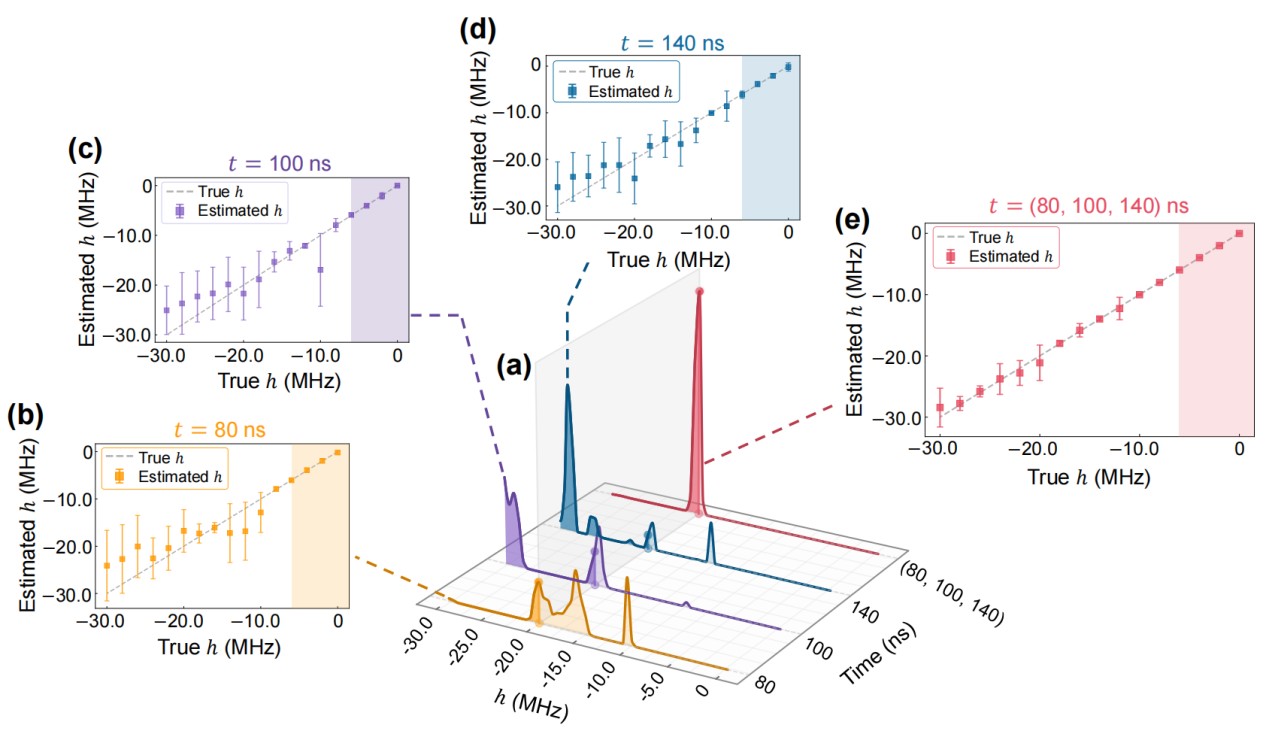
Figure 4. Joint time-domain Bayesian estimation results.
This study establishes Stark-Wannier localization as a practical mechanism for quantum-enhanced sensing. By integrating criticality-enhanced response with non-equilibrium dynamics in a superconducting quantum sensor, and by replacing demanding optimal measurements with a time-domain joint estimation strategy, the work provides an experimentally feasible route to high-precision sensing across a broad parameter range. Beyond this proof-of-principle demonstration, the same physical idea may be applied to gravimetry in tilted optical lattices and to electric-field sensing in charged-particle platforms such as trapped ions and quantum-dot arrays.
The co-first authors of the paper are Hao Li, former BAQIS postdoctoral fellow, and Yaoling Yang, Ph.D. student at the University of Electronic Science and Technology of China. The corresponding authors are Zhongcheng Xiang, Associate Senior Engineer at the Institute of Physics, Chinese Academy of Sciences; Kaixuan Huang, Assistant Research Fellow at BAQIS; Professor Abolfazl Bayat at the University of Electronic Science and Technology of China; and Professor Heng Fan, BAQIS adjunct researcher and researcher at the Institute of Physics, Chinese Academy of Sciences. The collaborators also include Kai Xu and Xiaohui Song, Associate Research Fellows at the Institute of Physics, Chinese Academy of Sciences; postdoctoral fellows Yun-Hao Shi, Yu Liu, and Gui-Han Liang; Ph.D. students Wei-Guo Ma, Tian-Ming Li, Jiachi Zhang, Cai-Ping Fang, Jia-Cheng Song, Hao-Tian Liu, Si-Yun Zhou, Zheng-He Liu, and Bing-Jie Chen; BAQIS Assistant Research Fellows Zheng-An Wang and Cheng-Lin Deng; former BAQIS postdoctoral fellows Ziting Wang and Yueshan Xu; senior engineers Yipeng Zhang and Kui Zhao; and engineer Jintao Li.
The authors thank Zheng-Hang Sun, a postdoctoral fellow at the University of Augsburg, and Xing-Jian He, a Ph.D. student at the University of Electronic Science and Technology of China, for insightful theoretical discussions. They also thank Professor Yu-Ran Zhang from South China University of Technology and BAQIS Assistant Research Fellow Yong-Yi Wang for valuable suggestions on data analysis. This work was supported by the National Natural Science Foundation of China, the Beijing Natural Science Foundation, the Innovation Program for Quantum Science and Technology, the Beijing Nova Program, the Beijing High-level Innovative and Entrepreneurial Talent Support Plan–Fundamental Research Talent Program, the Young Elite Scientists Sponsorship Program of the Beijing High Innovation Plan, the Open Research Fund Program of the Beijing National Laboratory for Condensed Matter Physics, and the China Postdoctoral Science Foundation.
Original Article Link: https://doi.org/10.1016/j.scib.2026.05.023
- AI Quantum Group Reports Progress in Observing and Modulating the Quantum Mpemba Effect on a Superconducting Quantum Processor
- Quantum Interface Devices and Systems Group of BAQIS,Tsinghua University, and Shanghai Jiao Tong University Develop the First AI-Enhanced Cryo-CMOS Quantum Control-and-Readout Chip