 中文
中文 Email
Email QCloud
 Log in

Quantum Measurement and Manipulation of Coherent Atomic System Group Realizes Adaptive AI-Based Qubit Readout and FPGA Hardware Acceleration
2026/05/06
Recently, the Quantum Measurement and Manipulation of Coherent Atomic System Group at the Beijing Academy of Quantum Information Sciences (BAQIS) has made progress in adaptive AI-assisted recognition and low-latency hardware acceleration for fluorescence-based qubit readout. On May 1, 2026, the work, titled “Field-programmable gate array–accelerated exposure-aware convolutional neural network for fluorescence-based qubit readout,” was published in Physical Review Applied.
Quantum computing is moving from improving the performance of individual qubits and quantum gates toward large-scale programmable operation and quantum error correction. At the same time, the role of classical systems is shifting from auxiliary equipment for generating preset control pulses, collecting experimental data, and performing offline analysis to a real-time information-processing core in quantum-computing workflows. In real-time quantum error correction and dynamic quantum circuits, the classical layer must continuously receive measurement results, complete state recognition, error diagnosis, and feedback decisions within a limited time window, and feed the results back to the quantum hardware. Conventional control-and-measurement systems are therefore facing increasing bottlenecks in adaptivity, processing throughput, and deterministic low-latency operation.
Qubit readout is the information interface between quantum and classical systems, and it also underpins subsequent error diagnosis, decoding, and feedback control. In fluorescence-based readout, which is widely used in neutral-atom and trapped-ion systems, AI models can extract discriminative features from complex noise backgrounds and limited photon signals, improving the accuracy of quantum-state identification. However, real experimental environments are not fixed: changes in exposure time, background noise, and other factors can all shift the data distribution. AI models for future quantum error correction and dynamic quantum circuits must therefore be not only accurate, but also adaptive to changing experimental conditions and deployable in low-latency, deterministic hardware-processing chains.
The team proposed an “exposure-aware” adaptive convolutional neural network for fluorescence-based qubit readout. In fluorescence readout, the qubit state is usually inferred from photon signals in camera images. Longer exposure times help improve readout accuracy but increase measurement duration; shorter exposures are more favorable for real-time feedback but are more susceptible to limited photon counts and noise fluctuations.
The key idea is to enable the AI model not only to “see the image,” but also to “know under what experimental conditions the image was acquired.” The team used exposure time as contextual information and fed it into the neural network, allowing the model to automatically adjust its decision rule under different exposure conditions. Experimental results show that this method maintains stable readout performance across multiple exposure times and generalizes well to exposure conditions not included in training, thereby reducing the need for condition-by-condition training and calibration.
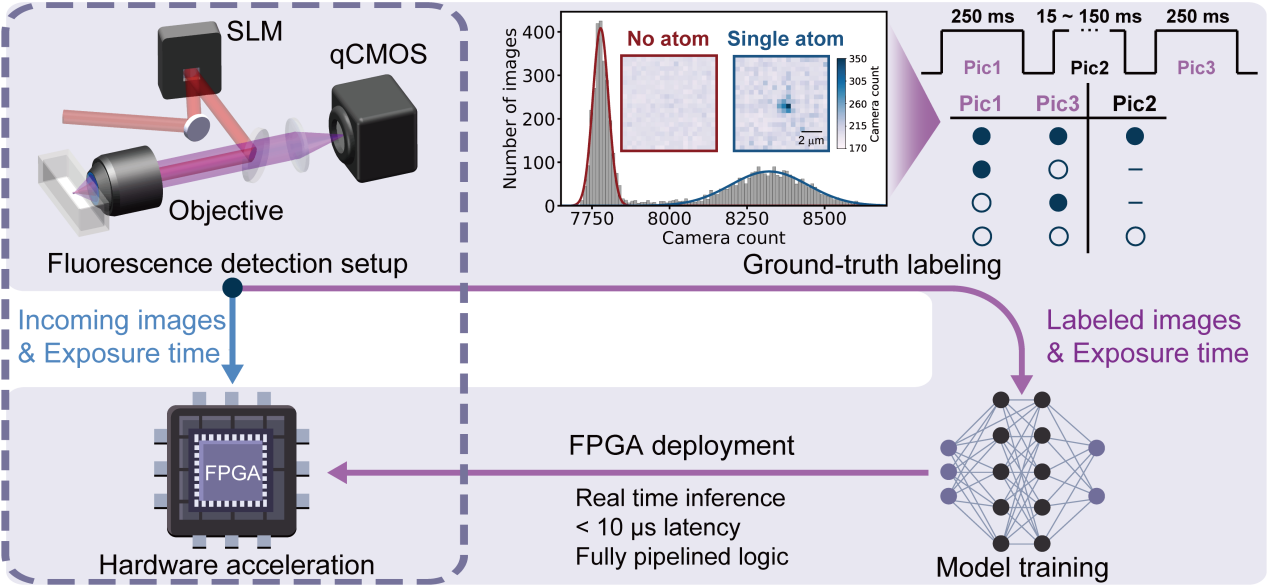
Figure 1. Workflow of exposure-aware AI readout and FPGA hardware acceleration.
Model-performance comparisons show that a conventional convolutional neural network suffers a clear performance degradation when the training and testing exposure times are mismatched. By contrast, the adaptive model with exposure-time input maintains stable readout performance over a broader exposure range, demonstrating robustness to changes in experimental conditions.
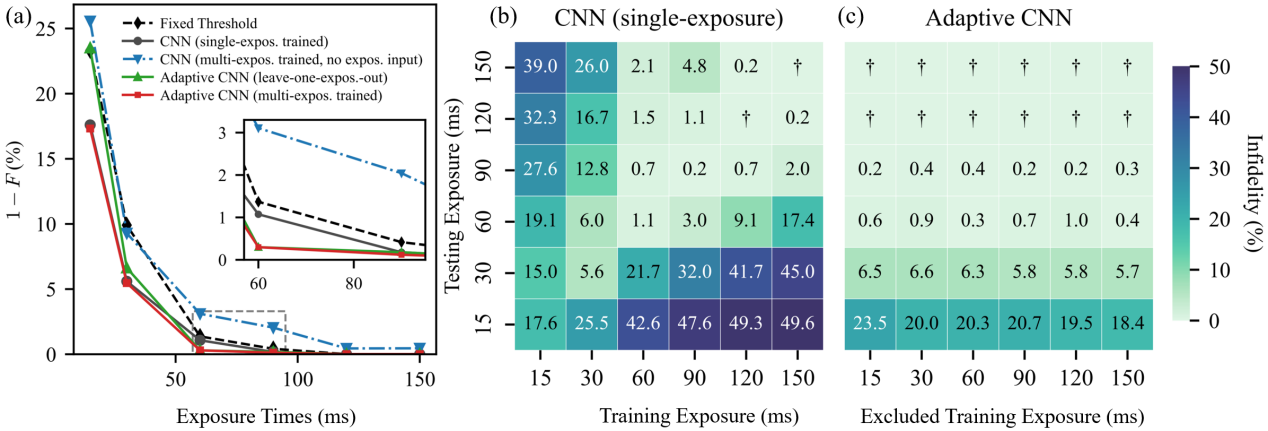
Figure 2. Cross-exposure generalization performance of the exposure-aware AI model.
For quantum error correction and mid-circuit measurement feedback, high recognition accuracy alone is not sufficient. AI models must also be embedded into quantum-classical processing chains and complete inference within a strict timing budget. To this end, the team further deployed the exposure-aware AI model on a field-programmable gate array (FPGA). Compared with a general-purpose CPU/GPU computing pipeline, this approach moves inference closer to the experimental data-acquisition and control hardware, reducing the extra overhead associated with measurement-data transfer across computing units and host scheduling. On the FPGA platform, the team achieved a single-frame inference latency of 9.85 microseconds. Compared with high-performance CPU and GPU implementations, the FPGA implementation delivers an approximately 30-fold improvement in inference speed while maintaining recognition accuracy comparable to that of the original neural-network model.
This work not only improves the speed of fluorescence-image recognition, but also uses fluorescence-based qubit readout as a testbed to demonstrate a quantum-classical co-processing approach that combines a context-aware AI model with low-latency FPGA-based hardware deployment. Looking ahead, similar methods may be extended to more complex quantum experimental environments, helping AI models evolve from offline analysis tools into online intelligent modules that support experimental operation. The work provides a useful reference for applying AI for Quantum to real-time sensing, decision-making, and feedback.
The first authors of the paper are Xiaolu Su and Mingcheng Liang, assistant researchers at BAQIS. The corresponding authors are Xiaolu Su at BAQIS and Prof. Li You of Tsinghua University, who is also affiliated with BAQIS. The collaborators include Tengyu Zhang and Yunkun Yang from Tsinghua University, as well as Peng Yin, a former postdoctoral researcher at BAQIS, Xiangliang Li, an assistant researcher at BAQIS, and BAQIS interns Zhengran Zhao, Wenqing Dai, and Xiaoqin Luo. This work was supported by the National Natural Science Foundation of China and by the Key Special Projects “Quantum Control and Quantum Information” and “Gravitational Wave Detection” under the National Key Research and Development Program of China.
Article link: https://journals.aps.org/prapplied/abstract/10.1103/vjzm-f13w
- The High-Temperature Superconductivity Group and the Low-Dimensional Quantum Materials Group Together with Collaborators, Have Made Progress in the Study of Quantum Phase Transitions in Superconducting States
- Online users have made significant scientific research progress based on the Quafu quantum cloud computing platform