 中文
中文 Email
Email QCloud
 Log in

High-Temperature Superconductivity Group Achieves Significant Progress in Twisted Cuprate Josephson Junction Research
2026/03/03
Recently, the High-Temperature Superconductivity Group of the Beijing Academy of Quantum Information Sciences (BAQIS), in collaboration with Tsinghua University and the Southern University of Science and Technology, carried out a systematic study on the AC Josephson effect in twisted cuprate high-temperature superconductors. Their research demonstrates the manipulation of fractional Shapiro steps in this system, challenging the prevailing viewpoint in the field and providing a trivial explanation for this exotic quantum behavior. The study, titled “Manipulating fractional Shapiro steps in twisted cuprate Josephson junctions”, was recently published as a cover article in the special issue on “Twisted Bilayer Systems” (Issue 4, 2026) of National Science Review.
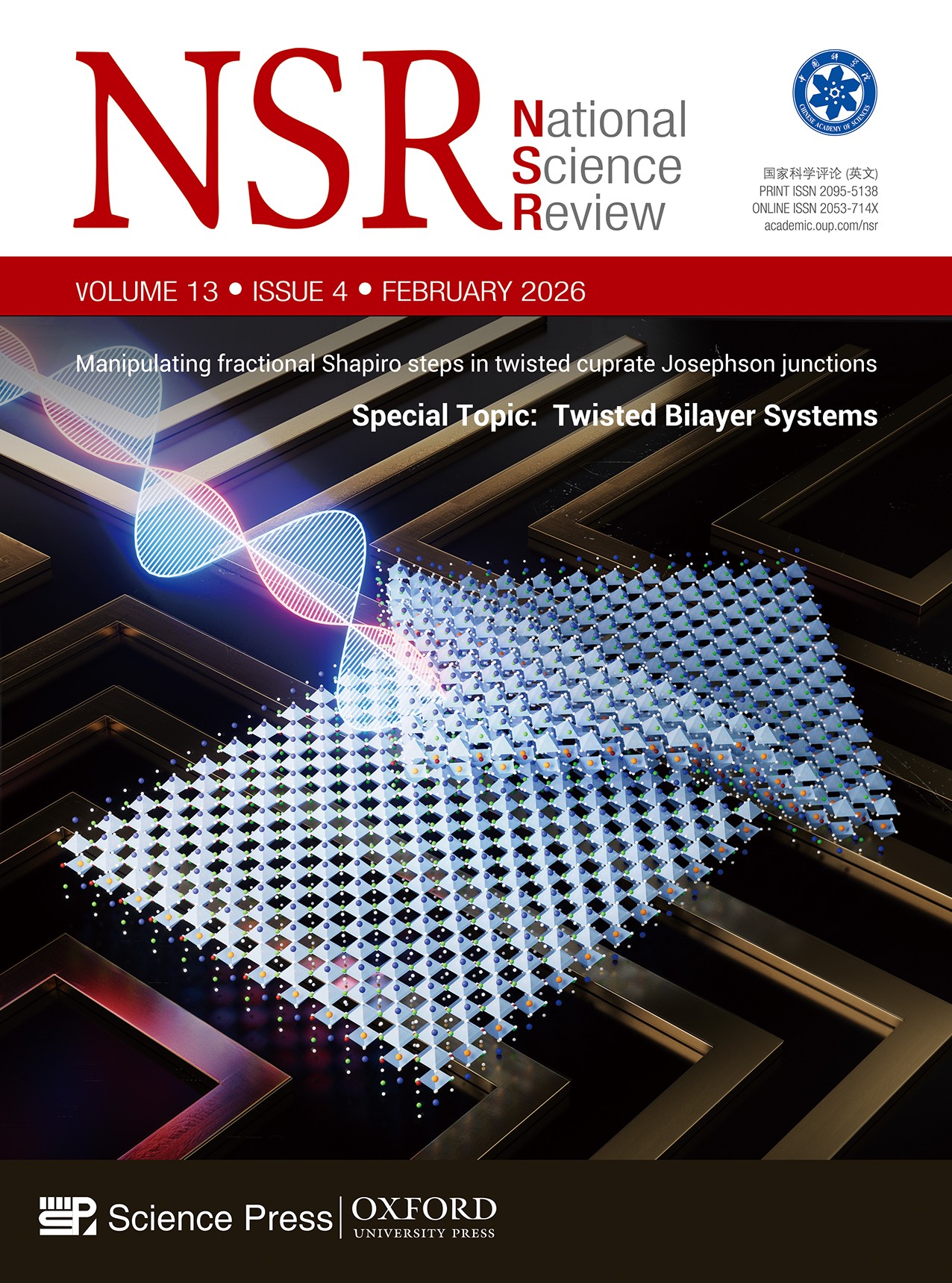
Figure 1:Cover image of National Science Review, Issue 4, 2026.
In past years, the high-temperature superconductivity group took the lead in studying ultrathin twisted cuprate Josephson junctions to investigate the pairing symmetry of high-temperature superconductors [Acta Phys. Sin. 72, 237402 (2023)]. Recently, several leading groups have also carried out this research. In 2023, the Harvard group led by Prof. Philip Kim [Science 382, 1422–1427 (2023)] reported half-integer Shapiro steps in the AC Josephson effect and a superconducting diode effect under zero magnetic field, supporting the proposed topological superconducting state in the twisted system. If confirmed, this offers a promising route to realizing high-temperature Majorana zero modes at the unprecedented temperature scale of liquid nitrogen, greatly expanding the potential applications of superconducting devices. Therefore, twisted cuprates have drawn widespread attention.
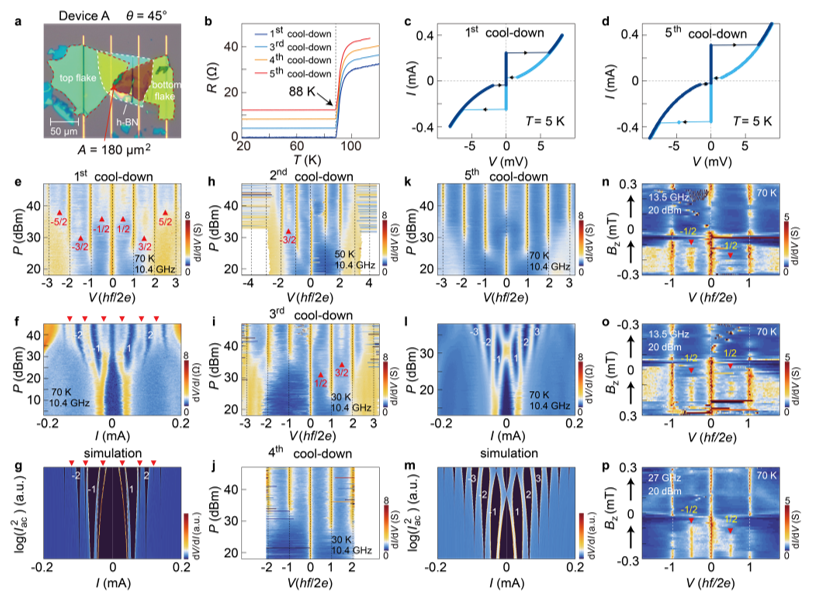
Figure 2:Representative experimental data.
In this work, the authors observed experimental results inconsistent with the theory of topological superconductivity. To examine this topological superconducting state, they built a new experimental setup and conducted detailed studies of the AC Josephson effect in twisted junctions. By further expanding the parameter space, they not only reproduced the half-integer steps but also revealed the metastable properties during thermal cycling. By applying magnetic fields or bias currents, they could induce half-integer and other fractional steps in junctions that had previously exhibited only integer Shapiro steps. They concluded that the half-integer steps arise from vortex pinning in the twisted cuprates, rather than from topological superconductivity. This work underwent careful review by five referees and received unanimous support.
The first authors are Dr. Yuying Zhu (Associate Researcher at BAQIS) and Dr. Heng Wang (Associate Researcher at Quantum Science Center of Guangdong-Hong Kong-Macao Greater Bay Area). The corresponding authors are Dr. Yuying Zhu, Prof. Ding Zhang (Tsinghua University), and Prof. Qi-Kun Xue (Southern University of Science and Technology). This work was supported by the Ministry of Science and Technology of China, the National Natural Science Foundation of China, the Innovation Program for Quantum Science and Technology and the China Postdoctoral Science Foundation.
Article Link: https://doi.org/10.1093/nsr/nwaf569