 中文
中文 Email
Email QCloud
 Log in

Breakthrough in Solid-State Quantum Light Sources: Yuan Zhiliang’s Group at BAQIS Realizes High-Efficiency Two Photon Emitter from a Single Quantum Dot
2026/03/02
The researchers have successfully fabricated a high-efficiency, high-purity two-photon emitter based on a quantum dot–micropillar cavity system. By employing an innovative dark-state biexciton excitation pathway combined with cavity-enhanced degenerate biexciton-exciton cascade emission, the device dramatically improves both the efficiency and purity of two-photon emission. On March 2, 2026, the results were published online in Nature Materials under the title “Purcell-enhanced two-photon emission from a quantum dot via dark-state biexciton loading”. The team was also invited to contribute a research briefing “Efficient two-photon emission from a quantum dot” to Nature Materials, further elaborating the significance and potential applications of this technology.
Deterministic two-photon states are a critical resource for quantum metrology, quantum imaging, and emerging quantum biomedical applications. However, conventional two-photon sources based on nonlinear parametric processes inherently obey Poissonian statistics and suffer from a non-negligible probability of emitting multiple photon pairs. Although a single quantum dot can generate photon pairs through biexciton cascade, efficiently populating the biexciton state while achieving simultaneously high brightness and high purity has remained a central challenge in the field.
In this work, the team proposed and realized a novel solution (Fig.1). They embedded a single In(Ga)As quantum dot into a micropillar optical cavity. Using resonant p-shell excitation, they selectively injected carriers into the long-lived dark exciton state, bypassing the fast radiative recombination channel of the bright exciton. This enabled efficient and deterministic loading of the biexciton state. Moreover, the biexciton and exciton levels in this system are nearly degenerate, allowing a single cavity mode to simultaneously enhance both optical transitions in the cascade, thereby significantly boosting the two-photon emission efficiency while maintaining high purity.
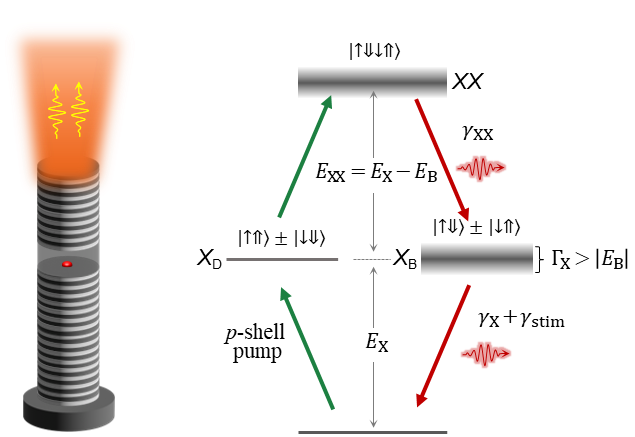
Fig.1 | Innovative approach to a quantum-dot two-photon emitter
Experimental results (Fig.2) show that under weak continuous-wave excitation, the zero-delay second-order correlation function reaches g(2)(0) as high as 3966, indicating extremely strong two-photon bunching. Under pulsed excitation, reconstruction of the photon number distribution from second- and third-order correlation measurements reveals that 98.3% of all emitted photons appear as photon pairs, with a two?photon generation efficiency of 29.9% at the first objective lens. This represents a leading result in the solid-state quantum light source community, combining both high two-photon purity and high efficiency.
Time-resolved correlation measurements further unveil the role of stimulated emission in this system. Owing to the degeneracy of the biexciton and exciton levels, the emission of the first biexciton photon accelerates the subsequent exciton photon emission, thereby enhancing the temporal correlation of the photon pair. The team also developed a rate-equation model that successfully reproduces the experimentally observed power dependences and bunching behaviour, providing a theoretical framework for understanding the two-photon emission dynamics.
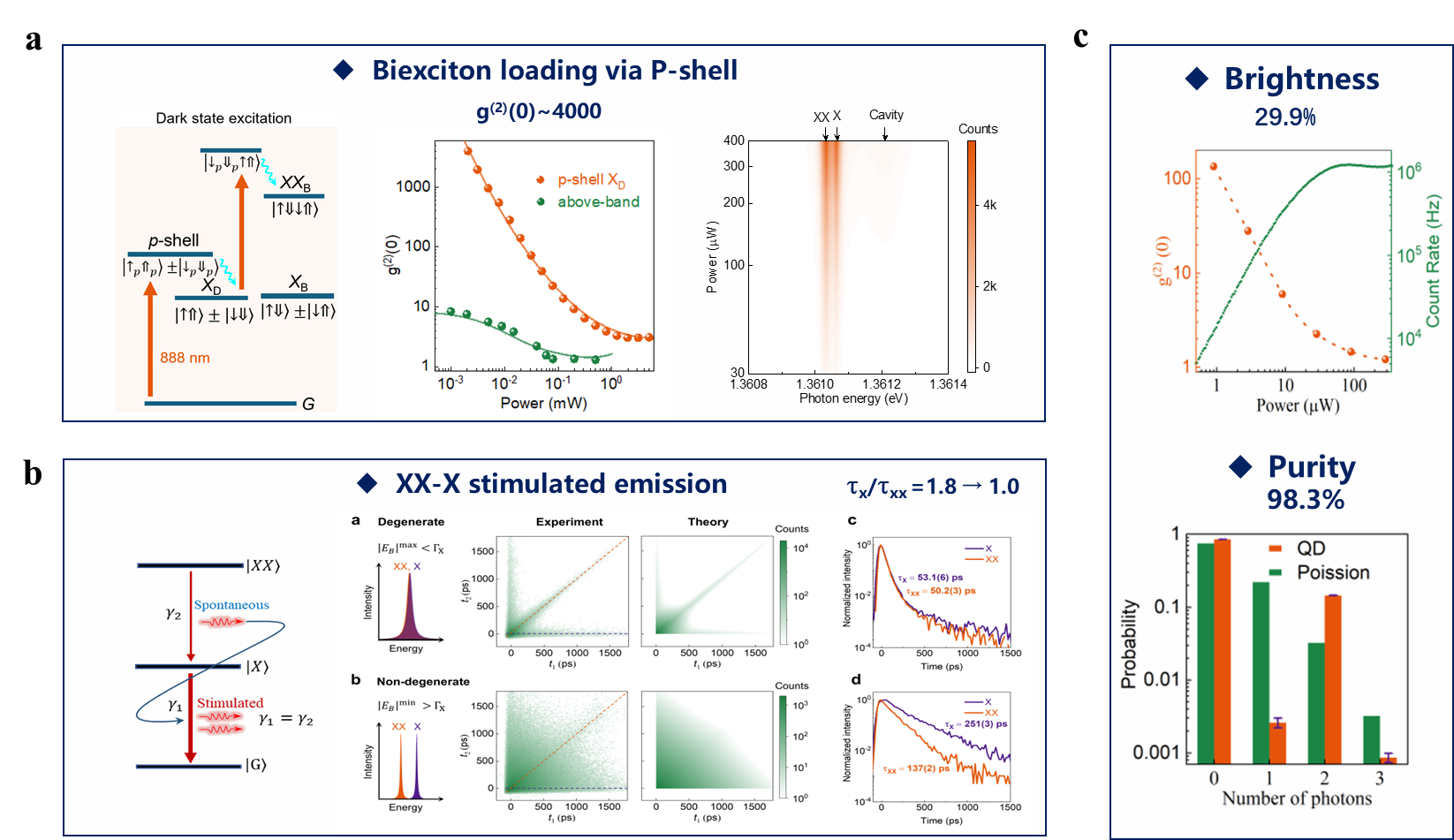
Fig.2 | Experimental results of the high-performance two-photon source
Reviewer comment: “This work, without any doubt, marks a major advance towards deterministic generation of photon-number states, particularly in the challenging regime of two-photon Fock state generation from a single solid-state emitter.”
The first author of the paper is Bang Wu, an assistant researcher at BAQIS. The corresponding author is Zhiliang Yuan, chief scientist at BAQIS. Other contributors from BAQIS include Li Liu (senior engineer), Xinrui Mao (postdoctoral researcher), and Xujie Wang (assistant researcher). Collaborators from the Institute of Semiconductors, Chinese Academy of Sciences, are Hanqing Liu (postdoctoral researcher), Haiqiao Ni (professor), and Zhichuan Niu (professor). This work was supported by the National Natural Science Foundation of China, Beijing Natural Science Foundation, China Postdoctoral Science Foundation, and the National Key Research and Development Program of China.
Article link: https://www.nature.com/articles/s41563-026-02522-9
Research Briefing link: to be updated
Team link: http://en.baqis.ac.cn/research/groups/?cid=816