 中文
中文 Email
Email QCloud
 Log in

BAQIS and Collaborators Advance Quantum Correlations with a Tunable Superconducting Bose-Hubbard Simulator
2026/07/29
Recently, the Beijing Academy of Quantum Information Sciences (BAQIS), in collaboration with the Institute of Physics, Chinese Academy of Sciences, Xi'an Jiaotong University, Hefei National Laboratory, and other institutions, reported new progress in quantum correlation dynamics using tunable superconducting Bose-Hubbard simulators. BAQIS and its collaborators used an array of superconducting three-level quantum units (qutrits) together with Floquet engineering to implement a Bose-Hubbard model with tunable on-site interactions, and systematically observed the evolution of density correlations, entanglement negativity, and quantum discord during two-particle quantum walks. On July 28, 2026, the study, titled "Observing Quantum Correlation Dynamics in Tunable Superconducting Bose-Hubbard Simulators," was published in Physical Review Letters.
Quantum walks are an important tool for inves tigating particle transport, topological states, anyon physics, and many-body quantum dynamics. Because two-particle quantum walks simultaneously involve particle statistics, interactions, and quantum correlations, they provide a valuable bottom-up starting point for understanding complex many-body dynamics. Photonic and cold-atom platforms have made substantial progress in two-particle walks and measurements of density distributions and correlation functions. In superconducting quantum systems, however, transmon devices naturally operate in the strong-interaction or near-hard-core-boson limit. Consequently, the on-site interaction in the Bose-Hubbard model is generally difficult to tune flexibly, limiting systematic studies of interaction-driven correlation dynamics.
To address this challenge, BAQIS and its collaborators used a superconducting quantum processor comprising nine transmon qutrits and 12 tunable couplers (Figure 1). The researchers selected seven or eight qutrits to form a one-dimensional chain, configured the tunable couplers to establish the required chain connectivity, and applied a longitudinal periodic drive to the even-numbered qutrits for Floquet engineering of their frequencies. This method effectively shifts the energy of the second excited state in the two-particle subspace, enabling continuous tuning of the Bose-Hubbard on-site interaction U while keeping the tunneling strength nearly constant. The superconducting qutrit array was thereby transformed from a system close to the hard-core-boson limit into a Bose-Hubbard quantum-simulation platform with tunable interactions.
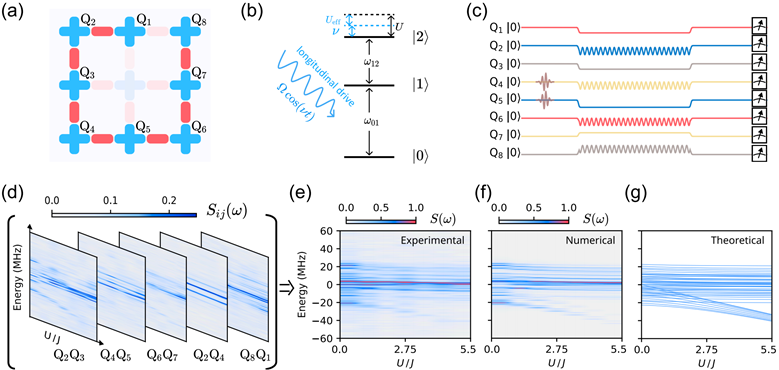
Figure 1. Experimental setup and energy-spectrum measurements.
The researchers first verified control of the interaction strength through energy-spectrum measurements (Figures 1d-g). All qutrits were brought to a common resonant frequency, and a longitudinal periodic drive was applied to the even-numbered qutrits. Time-dependent correlation functions between different qutrit pairs were then measured and Fourier transformed to obtain the two-particle energy spectrum. As the normalized interaction strength u = U/J increased, a pronounced two-band structure gradually emerged from the initially continuous single band. The agreement with numerical simulations and exact-diagonalization results confirmed that the platform can effectively realize tunable Bose-Hubbard dynamics.
Building on this capability, the researchers performed two-particle quantum-walk experiments with different initial states (Figure 2). They prepared three representative initial states: two particles placed on the two adjacent central qutrits; a Bell state on the two central qutrits; and two particles occupying the same central qutrit. By measuring the populations of different levels on each qutrit, the researchers mapped the propagation of the two particles along the chain. When the particles initially occupied adjacent sites or were prepared in the Bell state, stronger interactions suppressed population transfer between the single- and double-excitation levels. When both particles initially occupied the same site, strong interactions instead inhibited their separation, producing a more slowly propagating bound pair.
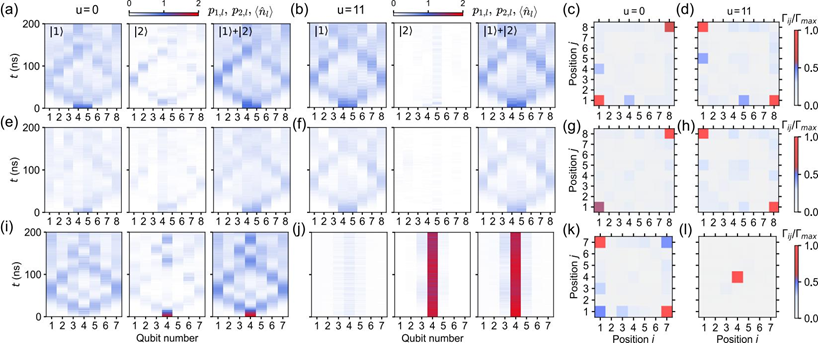
Figure 2. Quantum walks and density correlations by initial state and u.
When the two particles were initially placed on adjacent qutrits, the maximum of the density-density correlation function shifted from the diagonal to the anti-diagonal, clearly revealing a transition from boson-like bunching to fermion-like antibunching. Going further, the researchers leveraged particle-number-nonconserving measurements available in superconducting multilevel systems to perform quantum state tomography on two-qutrit subsystems, reconstruct their density matrices, and calculate negativity and quantum discord as measures of two-site entanglement and broader quantum-correlation dynamics (Figure 3). The experiments showed that interactions and initial states can markedly alter the propagation of entanglement and quantum discord. For some initial states, increasing the interaction strength strongly suppressed entanglement propagation, which nearly vanished between neighboring qutrit pairs, whereas quantum discord continued to propagate with appreciable amplitude. These observations demonstrate that quantum correlations in the nonequilibrium evolution of a multilevel Bose-Hubbard system do not always take the form of entanglement; quantum discord can reveal nonclassical correlations beyond entanglement.
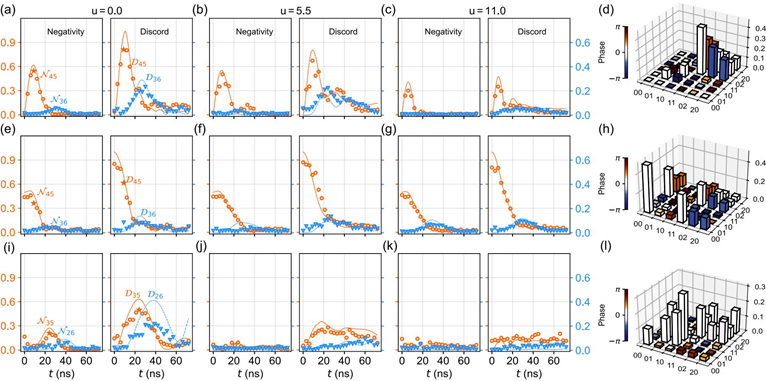
Figure 3. Negativity and quantum discord with different initial states and u.
The study further found that, under noninteracting or weakly interacting conditions, the entanglement generated during two-particle quantum walks could retain a similar form across different qutrit pairs and be transferred as the particles propagated. Stronger interactions generally destroyed this persistence. For the Bell-state initial condition, however, the initial entanglement does not depend on the |2〉level of an individual qutrit - that is, it does not involve double occupancy of a single site - so the associated entanglement signature remained visible during the quantum walk even at strong interactions. This result highlights the joint influence of initial-state structure and interaction strength on the propagation of quantum correlations.
This work advances superconducting quantum simulation from conventional measurements of populations and density correlations to the study of quantum-correlation dynamics at the density-matrix level. By combining Floquet-engineered tunable on-site interactions with qutrit quantum state tomography and analyses of negativity and quantum discord, BAQIS and its collaborators systematically demonstrated, on a single experimental platform, the interplay among particle statistics, interactions, and quantum correlations. The work provides a new experimental approach for investigating nonequilibrium dynamics in the Bose-Hubbard model and offers an important reference for simulating more complex strongly correlated quantum systems and probing the propagation of quantum correlations beyond entanglement with superconducting multilevel devices.
Looking ahead, this approach can be extended to larger qutrit arrays, Bose-Hubbard dynamics at higher excitation numbers, correlation propagation in open systems, and many-body models with topological or gauge structures. By exploiting the high-precision control and measurement, multilevel readout, and programmable interactions available in superconducting quantum processors, the platform can provide a richer experimental toolkit for nonequilibrium quantum many-body physics, quantum-correlation control, and multilevel quantum-information processing.
The co-first authors of the paper are Ziting Wang, a former BAQIS postdoctoral fellow; Si-Yun Zhou, a Ph.D. student at the Institute of Physics, Chinese Academy of Sciences; Professor Yun-Hao Shi of Xi'an Jiaotong University; and Kaixuan Huang, Assistant Research Fellow at BAQIS. The corresponding authors are Jingning Zhang, Associate Research Fellow at BAQIS; Haifeng Yu, Research Fellow at BAQIS; and Heng Fan and Shiping Zhao, adjunct researchers at BAQIS and Research Fellows at the Institute of Physics, Chinese Academy of Sciences. Other collaborators include Guangming Xue, Associate Research Fellow at BAQIS; Shoukuan Zhao and Yong-Yi Wang, Assistant Research Fellows at BAQIS; Kui Zhao and Yulong Feng, Senior Engineers at BAQIS; former BAQIS postdoctoral fellows Yueshan Xu and Hao Li; Kai Xu, Associate Research Fellow at the Institute of Physics, Chinese Academy of Sciences; Yu Liu, a postdoctoral fellow at the Institute of Physics; and Ph.D. students Zhaohua Yang, Wei-Guo Ma, Cai-Ping Fang, and Hao-Tian Liu at the Institute of Physics.
The work was supported by the National Natural Science Foundation of China, the Innovation Program for Quantum Science and Technology, the Beijing Nova Program, the Open Research Fund Program of the Beijing National Laboratory for Condensed Matter Physics, the Beijing Natural Science Foundation, and the Young Elite Scientists Sponsorship Program of the Beijing High Innovation Plan.
Original Article Link: https://journals.aps.org/prl/abstract/10.1103/hj9h-3tjc