 中文
中文 Email
Email QCloud
 Log in

Low-Dimensional Quantum Materials Group Reports Progress in Atomic-Step-Induced Anisotropic Strain in SnTe(111)/Au(111) Heterostructures Revealed by Moiré Superlattices
2026/06/24
Recently, the Low-Dimensional Quantum Materials Group at the Beijing Academy of Quantum Information Sciences (BAQIS) discovered a spontaneously formed moiré superlattice induced by interlayer twisting in SnTe(111)/Au(111) heterostructures. By utilizing the amplification effect of moiré patterns on subtle lattice distortions, the group revealed pronounced anisotropic local strain near atomic steps. The study shows that strain is mainly released or accumulated along the direction perpendicular to the step edge, while it remains relatively uniform along the direction parallel to the step. On June 19, 2026, the results were published in Chinese Physics Letters under the title “Anisotropic strain at atomic steps in SnTe(111)/Au(111) heterostructures revealed by moiré superlattices.”
SnTe is a prototypical topological crystalline insulator whose surface electronic states are protected by crystal mirror symmetry. Theoretical studies have suggested that lattice distortion or elastic strain can modify the gap of its topological surface states and may even drive topological phase transitions. In addition, heterostructures composed of SnTe and superconducting materials are considered an important platform for exploring topological superconductivity and Majorana zero modes. Therefore, identifying and controlling local strain in SnTe thin films at the nanoscale is crucial for understanding their topological properties and for developing quantum devices. On the other hand, moiré superlattices formed in twisted two-dimensional materials are highly sensitive to lattice constants, interlayer twist angles, and local deformations, providing a real-space approach to amplify and read out subtle strain. However, the formation mechanism and strain response of moiré superlattices in SnTe(111) thin films had not been systematically investigated.
Using molecular beam epitaxy combined with low-temperature scanning tunneling microscopy, the research group systematically studied the surface structure and local strain distribution in SnTe(111)/Au(111) heterostructures. The experiments revealed the coexistence of the intrinsic SnTe(111) lattice, a (3×3) surface reconstruction, and a spontaneously formed moiré superlattice in SnTe(111) films grown on Au(111). Atomic-resolution STM images and Fourier transform analysis showed that the moiré regions are typically about 0.35 nm higher than the adjacent non-moiré regions and exhibit an approximately 4° lattice orientation difference relative to neighboring reconstructed regions. These observations indicate that the moiré superlattice originates from interlayer twisting between adjacent SnTe layers rather than from a simple surface reconstruction. Further lattice superposition simulations showed that the lattice mismatch at the SnTe/Au interface can only produce a short-period moiré pattern much smaller than that observed experimentally. In contrast, when a relative twist angle of about 4.28° is introduced between two SnTe(111) layers, the experimentally observed moiré period of approximately 5 nm can be well reproduced, confirming the interlayer-twist origin of the long-period moiré superlattice.
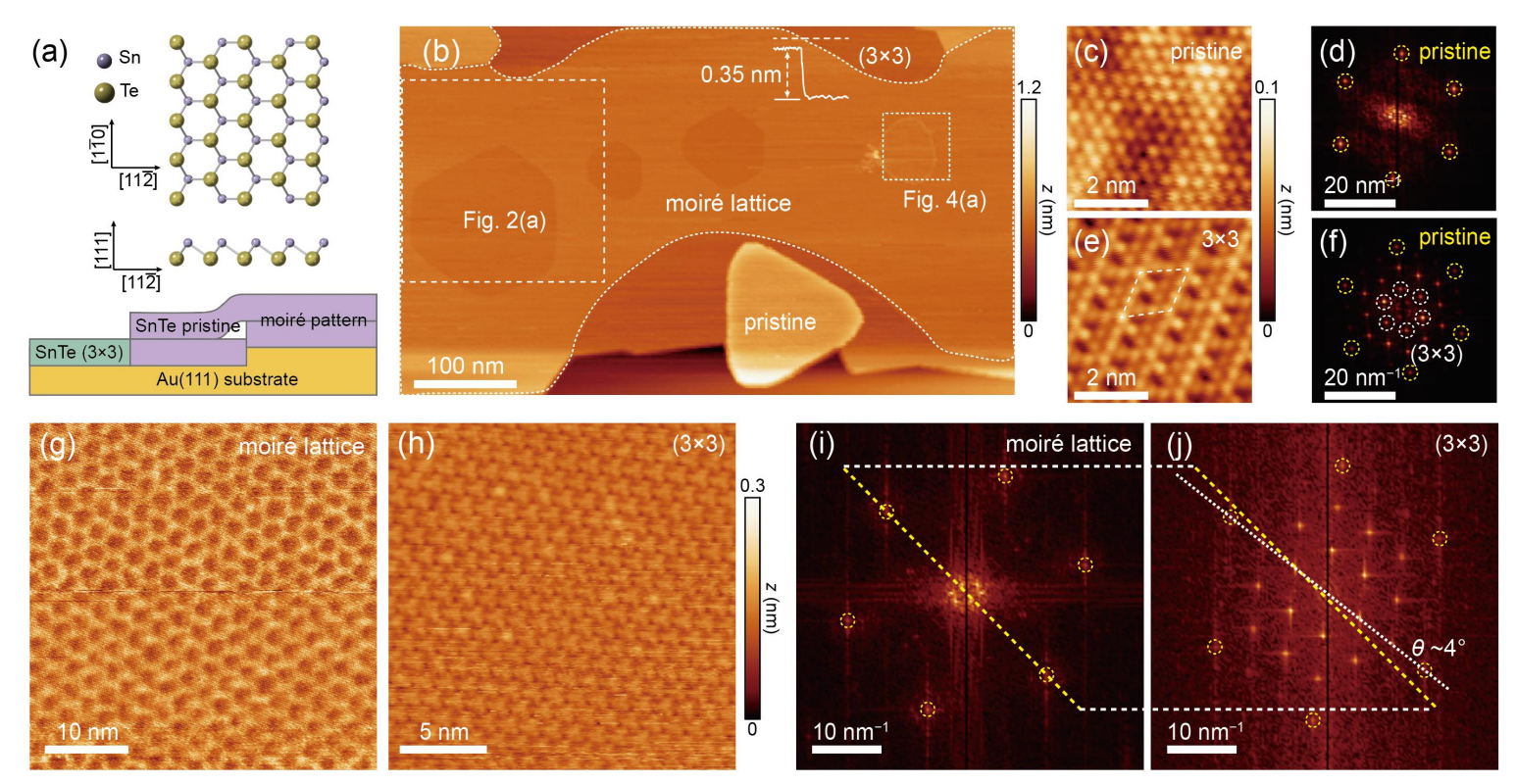
Figure 1. Intrinsic SnTe(111) lattice, (3×3) surface reconstruction, and spontaneously formed moiré superlattice.
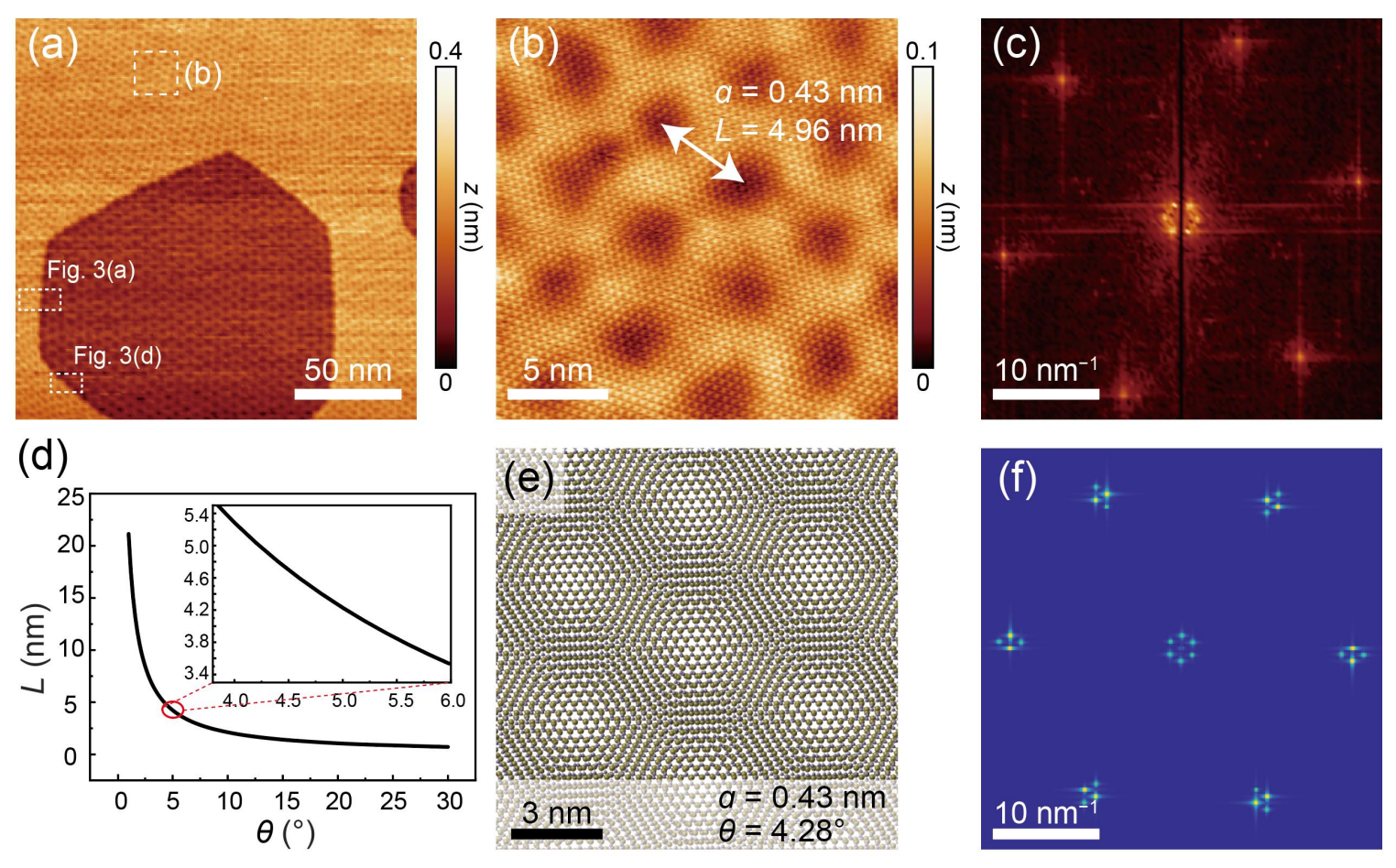
Figure 2. Origin of the SnTe/Au interfacial moiré pattern.
More importantly, the group found that the moiré superlattice undergoes pronounced periodic variation and morphological distortion near atomic steps. Since long-period moiré patterns can amplify subtle lattice distortions, atomic-scale local strain can be converted into clearly visible changes in the moiré period. Through geometric phase analysis, the group further extracted the local strain tensor from atomic-resolution STM images. The results show that the strain component εxx, perpendicular to the step edge, exhibits a clear gradient near the step, with a magnitude reaching approximately ±2%. In contrast, the strain component εyy, parallel to the step edge, remains relatively uniform, with variations typically below 1%. This result demonstrates that atomic steps are not merely morphological boundaries; rather, they can act as local mechanical boundary conditions that mainly induce strain accumulation and release along the direction perpendicular to the step, thereby generating pronounced anisotropic local strain.
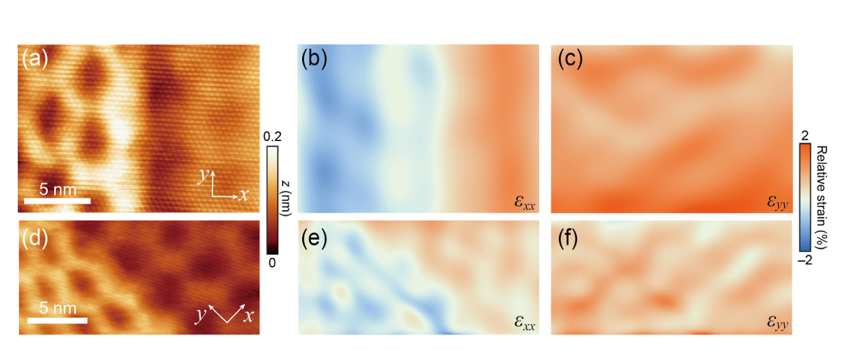
Figure 3. SnTe(111) moiré superlattice and local strain distribution near atomic steps on Au(111). Geometric phase analysis shows that the normal strain component εxx exhibits a clear gradient and sign reversal on the two sides of the step, while the parallel component εyy remains relatively uniform.
Similar moiré distortions were also observed near island edges, where strain gradients extending over tens of nanometers cause the nearly hexagonal moiré unit cells far from the step to become significantly elongated near the edge. By introducing a uniaxial strain gradient from 0% to 5% into one SnTe layer with an interlayer twist angle of 4.28°, the geometric model successfully reproduced the moiré distortion observed experimentally. These results indicate that few-layer SnTe(111) exhibits interlayer twisting and mechanical flexibility similar to those of two-dimensional van der Waals materials. Its local structure and associated electronic states may therefore be tunable through substrate mismatch, uniaxial stress, or flexible substrates.
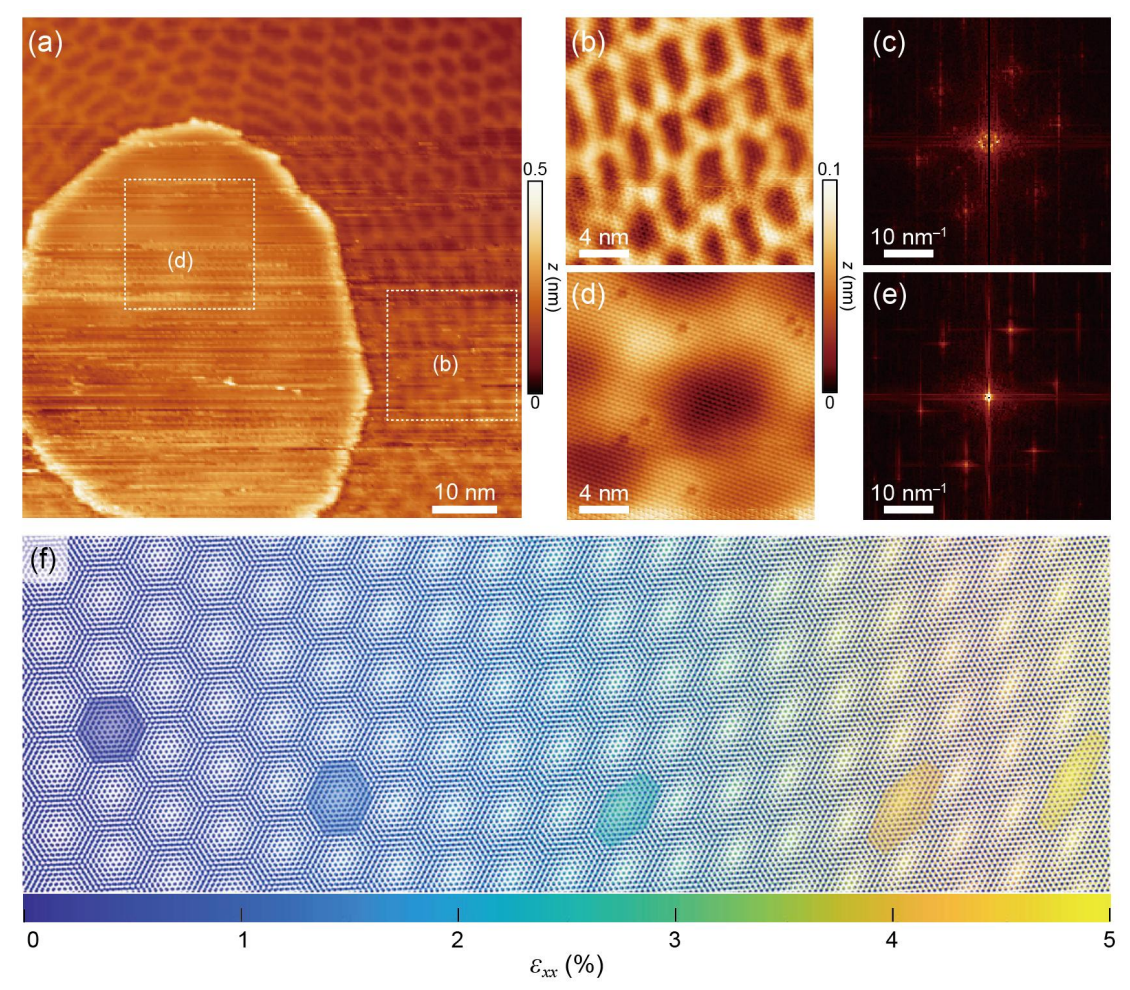
Figure 4. Near island edges, the moiré superlattice gradually evolves from a nearly hexagonal pattern far from the step into an elongated and distorted morphology. Numerical simulations show that introducing a 0%~5% strain gradient into one SnTe layer can reproduce the experimentally observed moiré distortion, indicating that island edges can also generate strong local strain fields over a relatively large spatial range.
This study systematically reveals atomic-step-induced anisotropic local strain in SnTe(111)/Au(111) heterostructures and demonstrates that spontaneously formed moiré superlattices can serve as highly sensitive real-space strain probes. The results show that both Au(111) substrate steps and island edges can significantly modulate the local lattice structure of SnTe(111) thin films, with strain primarily released or accumulated along the direction perpendicular to the step edge. This work not only deepens the understanding of structural responses and van der Waals epitaxial behavior in SnTe(111) thin films, but also provides new experimental evidence for controlling the surface states of topological crystalline insulators through strain engineering. In the future, substrate selection, step engineering, externally applied uniaxial stress, or flexible substrates may enable controllable tuning of SnTe topological surface states, proximity-induced superconductivity, and topological superconducting phases, providing a new materials basis for designing SnTe-based topological quantum devices and Majorana platforms.
The first author of the paper is Rui-Qi Cao, a PhD student at BAQIS. The corresponding author is Dr. Kai Chang of BAQIS. Other collaborators include Professor Stuart S. P. Parkin, Professor Jeison Fischer, and Dr. Dirk Sander from Max Planck Institute of Microstructure Physics. This work was supported by the National Science and Technology Major Project, the National Natural Science Foundation of China, the Beijing Natural Science Foundation, and projects of the Beijing Municipal Science & Technology Commission.
Original Article Link:https://iopscience.iop.org/article/10.1088/0256-307X/43/6/060714
- Quantum Interface Devices and Systems Group of BAQIS,Tsinghua University, and Shanghai Jiao Tong University Develop the First AI-Enhanced Cryo-CMOS Quantum Control-and-Readout Chip
- Significant Progress Made by BAQIS Quantum Algorithm Application R&D Group in Solving Complex Problem via Quantum Computing