 中文
中文 Email
Email QCloud
 Log in

Lu Quanyong's Group and Collaborators Achieved a Breakthrough in Mid-Infrared Microcomb Research
2026/06/04
Recently, a research team led by Lu Quanyong at the Beijing Academy of Quantum Information Sciences (BAQIS), in collaboration with Liu Fengqi and Zhang Jinchuan’s teams from the Institute of Semiconductors, Chinese Academy of Sciences (CAS), has made a major breakthrough in mid-infrared (mid-IR) microcavity optical frequency combs (microcombs). For the first time, the joint team proposed and demonstrated a room-temperature mid-IR directionally radiating microcavity quantum cascade laser (QCL) optical frequency comb. This innovation successfully addresses long-standing challenges of traditional ring-shaped microcavities, such as low light extraction efficiency and poor directional emission capabilities, providing a highly promising, high-performance, monolithically integrated platform for mid-IR microcomb spectroscopy and sub-terahertz (sub-THz) communications. On May 26, 2026, the research was published in Optica under the title ‘Notched microcomb based on a quantum-cascade laser.’ The research team designed a novel microcavity topology primarily consisting of an elliptical ring resonator with an eccentricity of approximately 1.2. A semi-elliptical ‘notch’ was precisely engineered at the intersection of the minor axis and the outer boundary to serve as a scattering point, as shown in Figure 1.
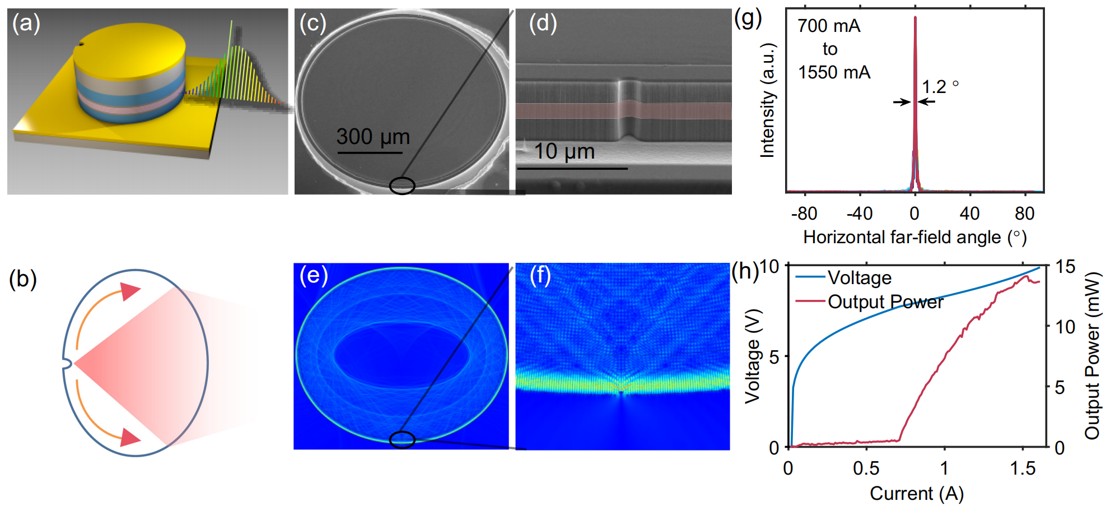
Figure 1. Design of the notched mid-infrared microcavity structure.
The device exhibits excellent thermal dissipation and lateral confinement. The inner boundary of the device is fabricated via wet chemical etching and refilled with a Fe-doped InP (Fe:InP), providing an efficient lateral heat dissipation pathway that enables high-performance operation under room-temperature continuous-wave (RT-CW) conditions. Conversely, the outer boundary is formed using inductively coupled plasma (ICP) dry etching to achieve high-quality-factor (Q-factor) whispering-gallery modes (WGMs). Due to the symmetry-breaking induced by the notch, a portion of the optical field refracts at this localized spot. Capitalizing on the intrinsic collimation and focusing effects of the elliptical cavity, ultra-narrow directional radiation is achieved. Experimental results demonstrate that the device operates stably in RT-CW mode, delivering an output wavelength of approximately 7.5 μm, a threshold current of around 0.71 A, a maximum output power of 14.1 mW, and a horizontal far-field divergence angle of only about 1.2°, signifying exceptional directional output characteristics.
As illustrated in Figure 2, when the drive current exceeds 0.92 A, the device transitions into a self-starting frequency comb state. The experimentally measured beatnote signal exhibits a center frequency of approximately 32.4 GHz. Over a broad current range, the beat-note linewidth remains consistently below 600 Hz, indicative of a robust phase-locking relationship among the comb modes. Crucially, this tiny notch acts as a ‘backscattering point’ that facilitates coupling between the clockwise (CW) and counter-clockwise (CCW) modes within the microcavity. At an appropriate pump level, this coupling induces and stabilizes coherent localized pulse structures inside the cavity.
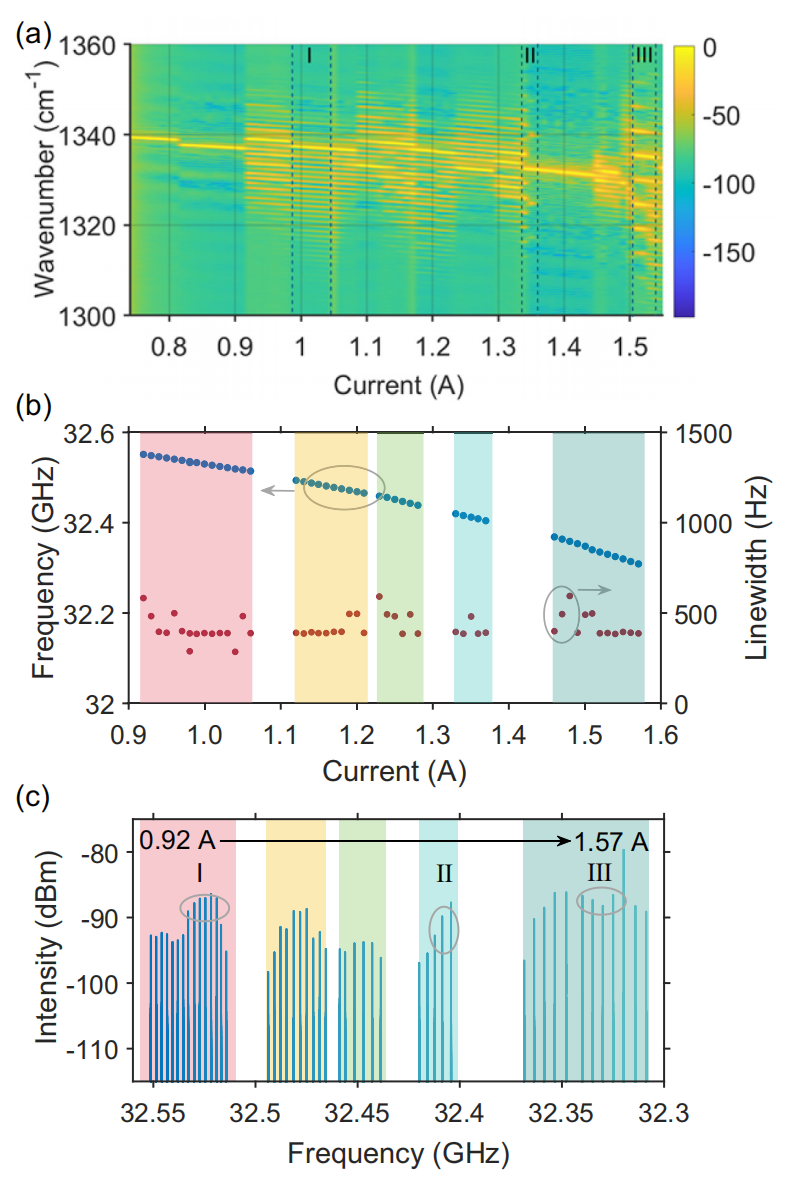
Figure 2. Spectra map and RF intermode beatnotes.
Furthermore, complemented by numerical simulations based on the Complex Ginzburg-Landau Equation (CGLE), the research team successfully observed the evolution of different-order quasi-soliton states and high-order harmonic frequency comb (HFC) states as a function of the drive current within the same device. As displayed in Figure 3, the harmonic combs exhibit massive frequency spacings of 97 GHz (3-FSR), 162 GHz (5-FSR), and 227 GHz (7-FSR), respectively. This unique quasi-harmonic property, which allows the coexistence of fundamental and harmonic modes, significantly enriches the exploration of nonlinear dynamics within microcavities.
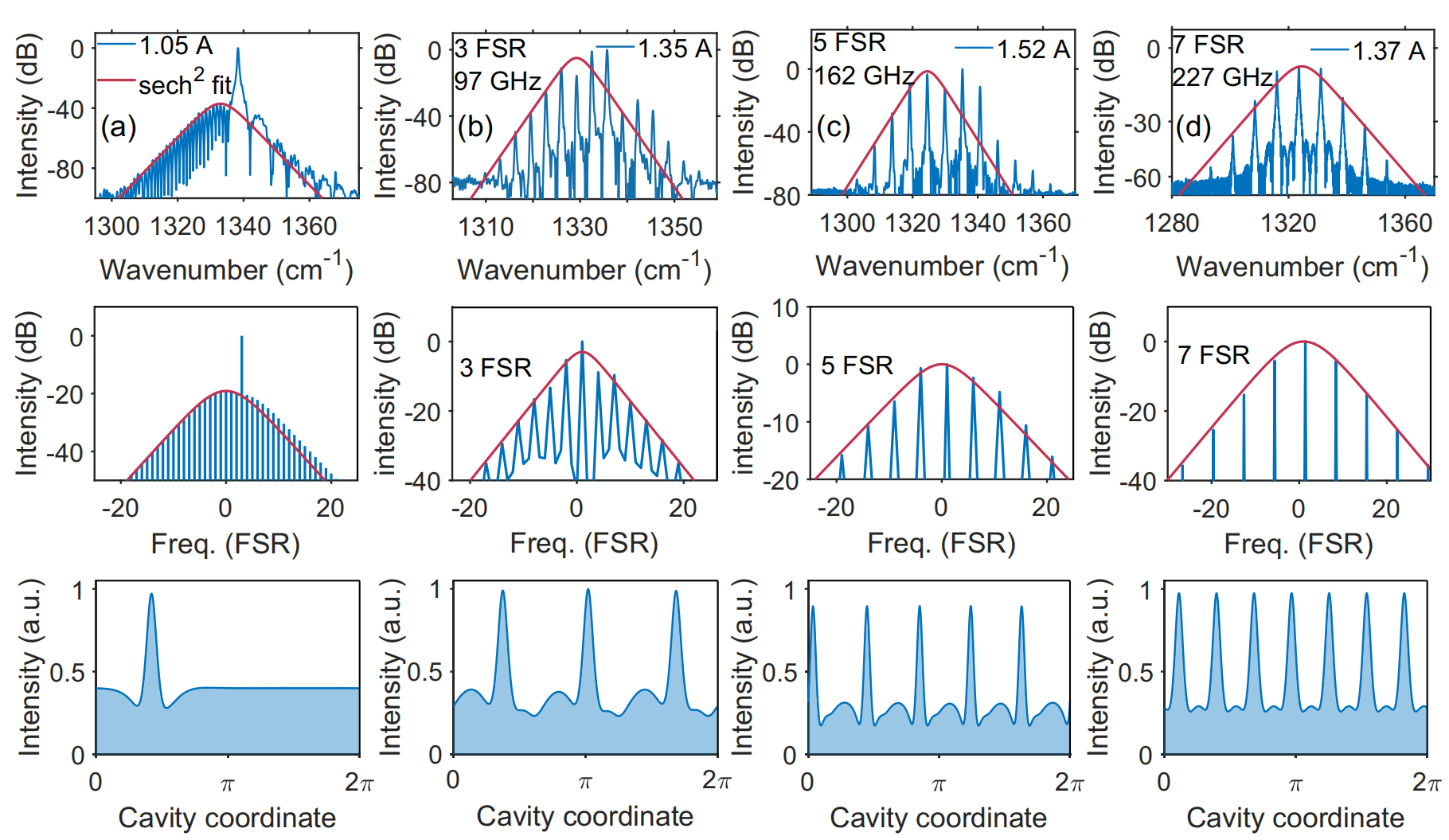
Figure 3. Numerical simulation results and measured experimental spectra.
Dapeng Wu, an intern at BAQIS and a Ph.D. student at the Institute of Semiconductors, CAS, is the first author of the paper. This work was supported by grants from the National Natural Science Foundation of China (NSFC), the Youth Innovation Promotion Association of the Chinese Academy of Sciences, and the Beijing Natural Science Foundation, among other projects.
Original Article Link: https://doi.org/10.1364/OPTICA.585839