 中文
中文 Email
Email QCloud
 Log in

Ultrafast Optical Spectroscopy Group Reports New Progress in Exciton Polariton Relaxation Mechanisms
2026/06/04
Recently, the Ultrafast Optical Spectroscopy Group at the Beijing Academy of Quantum Information Sciences (BAQIS) made important progress in the study of exciton polariton relaxation mechanisms in monolayer WS2 microcavities. This study reveals the synergistic modulation of polariton relaxation by temperature, excitation power, and cavity detuning, providing new insights into polariton dynamics in two-dimensional transition metal dichalcogenides (TMDs) microcavities and the design of high-performance polaritonic devices. The findings were published in ACS Nano on March 17, 2026, in a paper titled “Microscopic Mechanisms of Exciton Polariton Relaxation in Monolayer WS2 Microcavities.”
Exciton polaritons are hybrid light–matter quasiparticles formed through the strong coupling between semiconductor excitons and microcavity photons. They hold great promise for applications in low-threshold lasers, ultrafast optical switches, and nonlinear optical devices. Transition metal dichalcogenides, with their large exciton binding energies, strong oscillator strengths, and advantages for van der Waals heterointegration, provide an ideal platform for room-temperature polaritonic devices. However, polariton condensation, transport, and nonlinear responses in monolayer TMDs microcavities are highly dependent on their energy relaxation processes, particularly whether polaritons can efficiently relax to the bottom of the lower polariton branch (LPB) following nonresonant excitation. The relative contributions of relaxation channels such as polariton–phonon scattering and polariton–polariton interactions, as well as their dependence on temperature, excitation power, and cavity detuning, remain to be systematically clarified.
The research team performed temperature-dependent momentum-space photoluminescence (PL) measurements on two samples with different cavity detuning, Δ = -20 meV and Δ = -92 meV. The results show that, as temperature decreases, the position of the maximum PL intensity on the LPB exhibits a nonmonotonic evolution, shifting from the low-energy region to the high-energy region and then back to the low-energy region. The turning temperature decreases as the cavity detuning becomes larger (Figure 1). This nonmonotonic relaxation behavior can be attributed to the competition between thermally activated phonon scattering and polariton–polariton interactions. The total polariton relaxation rate has contributions from phonon-assisted scattering and interaction-assisted scattering. Owing to the finite lifetime of polaritons, what ultimately determines the relaxation efficiency is the effective relaxation rate relative to the decay rate. At high temperatures, the large thermal phonon population allows phonon scattering to dominate polariton relaxation toward low-energy states. As temperature decreases, phonon scattering gradually weakens, while the contribution from polariton–polariton interactions becomes increasingly significant. The research team further carried out numerical simulations based on a driven–dissipative Gross–Pitaevskii model incorporating both phonon-assisted relaxation and polariton interaction terms. The simulations successfully reproduced the “low-energy–high-energy–low-energy” shift of the maximum PL intensity position on the LPB (Figure 2).
The team also investigated how excitation power regulates the polariton energy distribution. They found that, at room temperature, increasing the excitation power facilitates polariton relaxation toward low-energy states. At low temperatures, however, increasing the power causes polaritons to redistribute from low-energy states toward higher-energy states, indicating saturation of the interaction-mediated relaxation channel. This work provides an important physical picture for understanding and controlling polariton relaxation processes in two-dimensional TMDs microcavities, and offers mechanistic guidance for the design of high-performance polaritonic devices.
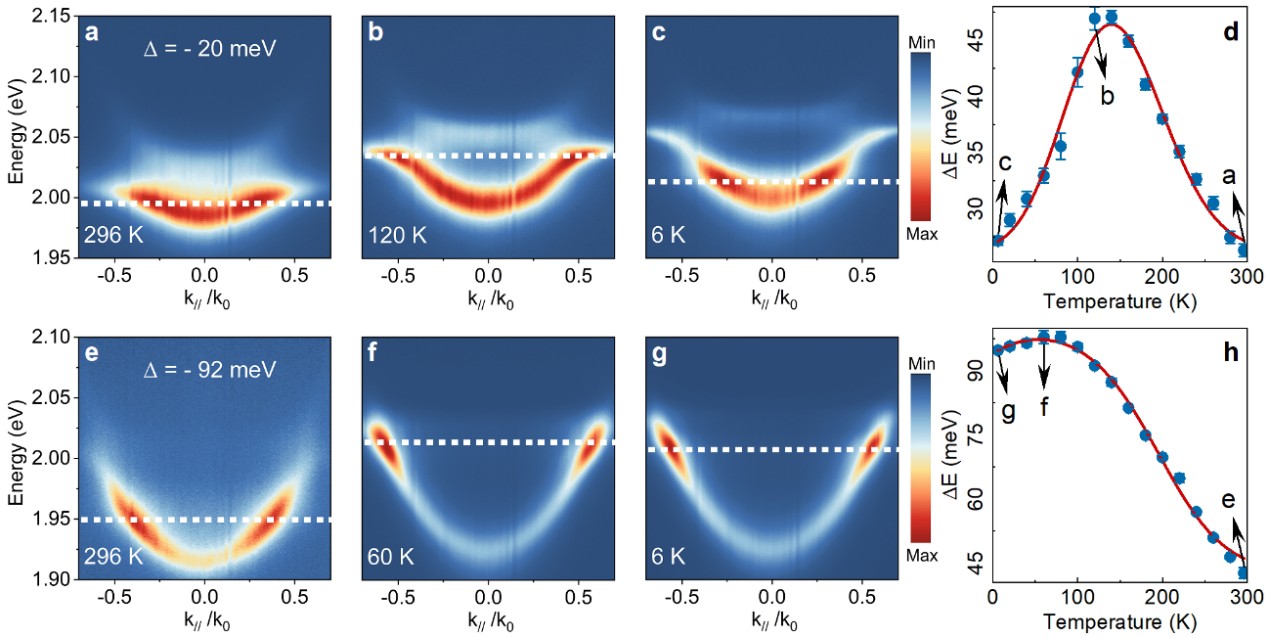
Figure 1. Temperature dependence of polariton relaxation in momentum space.
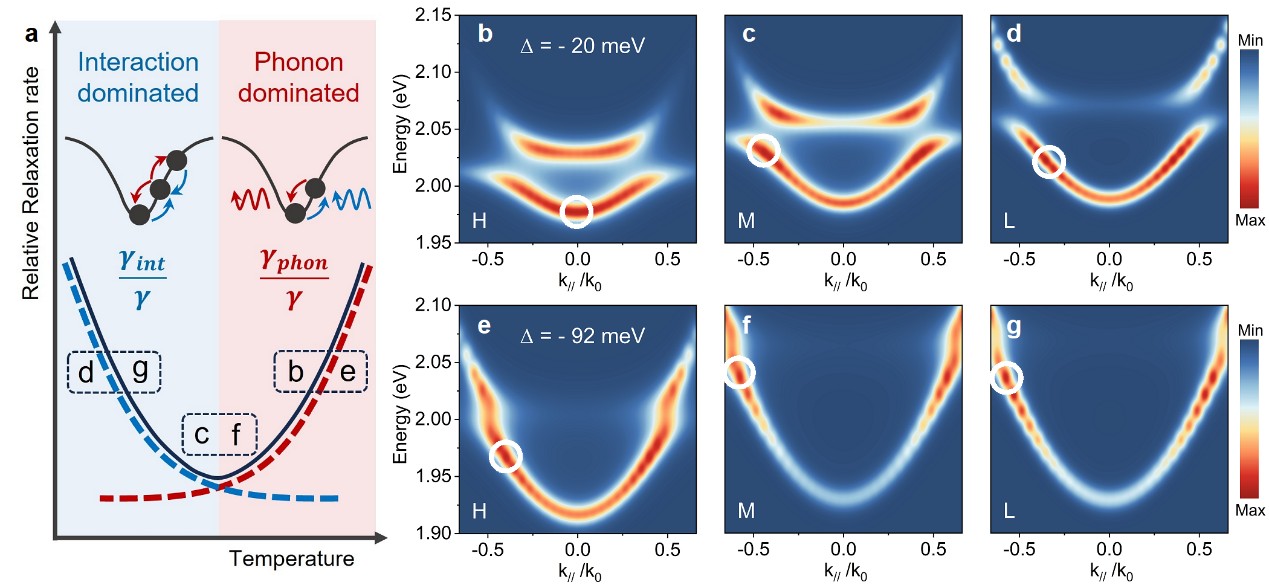
Figure 2. Mechanism of polariton relaxation.
The co-first authors of the paper are BAQIS Ph.D. student Zhiyuan An and postdoctoral fellow Lingyu Tian. The corresponding authors are BAQIS Adjunct Researcher and Tsinghua University Professor Qihua Xiong, BAQIS Adjunct Researcher and The Chinese University of Hong Kong, Shenzhen Assistant Professor Sanjib Ghosh, and Wuhan University Professor Ziyu Wang. The collaborators also include BAQIS Assistant Research Fellow Huawen Xu, and Tsinghua University Ph.D. students Yubin Wang, Baixu Xiang, and Guihan Wen. This work was supported by the Quantum Science and Technology-National Science and Technology Major Project, the National Key Research and Development Program of China, the National Natural Science Foundation of China, the China Postdoctoral Science Foundation, and the New Cornerstone Science Foundation.
Original Article Link: https://pubs.acs.org/doi/abs/10.1021/acsnano.5c18736