 中文
中文 Email
Email QCloud
 Log in

Low-Dimensional Quantum Materials Group Made New Progress in Intrinsic Superconductivity Regulation of FeTe Thin Films
2026/05/28
Recently, the Low-Dimensional Quantum Materials Group and the Topological Quantum Computing Group at the Beijing Academy of Quantum Information Sciences (hereinafter referred to as "BAQIS"), in collaboration with a group from Renmin University of China, achieved reversible tuning between magnetic order and the superconducting state in FeTe thin films by precisely controlling stoichiometry. This work reveals the microscopic mechanism underlying the competition between magnetism and superconductivity in iron-based chalcogenides. On May 27, 2026, the related research findings were published in ACS Nano under the title "Reversible tuning of magnetic order and intrinsic superconductivity in strained FeTe films via stoichiometry control".
FeTe is a prototypical parent compound of the iron-chalcogenide superconductor family, undergoing a structural phase transition near 70 K and forming long-range bicollinear antiferromagnetic (AFM) order. Unlike most iron-based superconductors, bulk FeTe at ambient pressure does not exhibit superconductivity, but its ground state is believed to be extremely close to the superconducting state, making it exceptionally sensitive to external perturbations such as chemical doping and epitaxial strain. Consequently, it has become an ideal platform for exploring the competition between magnetism and superconductivity. However, the mechanisms of previous strategies for inducing superconductivity in FeTe thin films (such as oxygen doping or heterostructure interfaces) have long been a subject of debate: What is the core factor that induces superconductivity in FeTe? Is there a unified mechanism behind these different methods? These questions have long puzzled researchers.
To address these questions, the research team used molecular beam epitaxy (MBE) technology to grow high-purity FeTe thin films on SrTiO3 substrates. Combining scanning tunneling microscopy (STM), angle-resolved photoemission spectroscopy (ARPES), in-situ/ex-situ transport measurements, and first-principles calculations, they systematically investigated the magnetism and superconductivity of FeTe thin films.
The study revealed that by reducing the concentration of interstitial iron impurities, long-range bicollinear antiferromagnetic order could be effectively suppressed while quasiparticle coherence was enhanced. This successfully induced an intrinsic superconducting state with a transition temperature above 10 K without the aid of oxygen doping or heterostructure interfaces. Crucially, this process is completely reversible: by precisely adjusting the iron concentration through controllable in-situ annealing, the sample could be repeatedly switched between the antiferromagnetic state and the superconducting state.
Atomic-scale scanning tunneling microscopy characterization unveiled the microscopic process of this evolution: in iron-rich samples, a large amount of interstitial iron impurities stabilized long-range antiferromagnetic order, appearing as stripe-like modulations in atomic-resolution images. However, after annealing in a Tellurium atmosphere, the interstitial iron was effectively removed, the antiferromagnetic order vanished, and the sample restored a 1×1 tetragonal lattice structure. First-principles calculations further indicated that the tensile strain introduced by the substrate altered the energy competition among different magnetic ordered states, meaning the bicollinear antiferromagnetic state was no longer the ground state and was instead replaced by near-degenerate magnetic states. Magnetic fluctuation effects suppressed long-range magnetic order, creating favorable conditions for superconducting pairing.
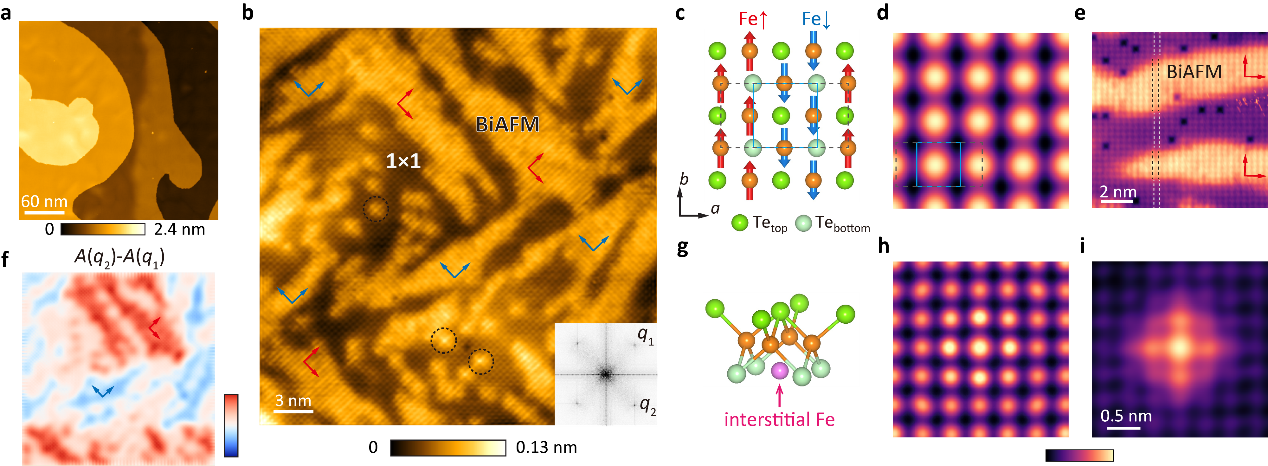
Figure 1. Nanoscale structural and electronic state characterization of FeTe thin films.
Angle-resolved photoemission spectroscopy measurements showed that the removal of interstitial iron significantly enhanced the spectral features of the electronic structure, rendering the quasiparticle peaks sharp and distinct. Concurrently, a Dirac-cone-like linear dispersion structure was observed near the Fermi surface, which is highly reminiscent of the topological surface states in FeTe1-xSex, a candidate material for topological superconductivity. This suggests that pure FeTe thin films hold potential value for research into topological quantum states of matter.
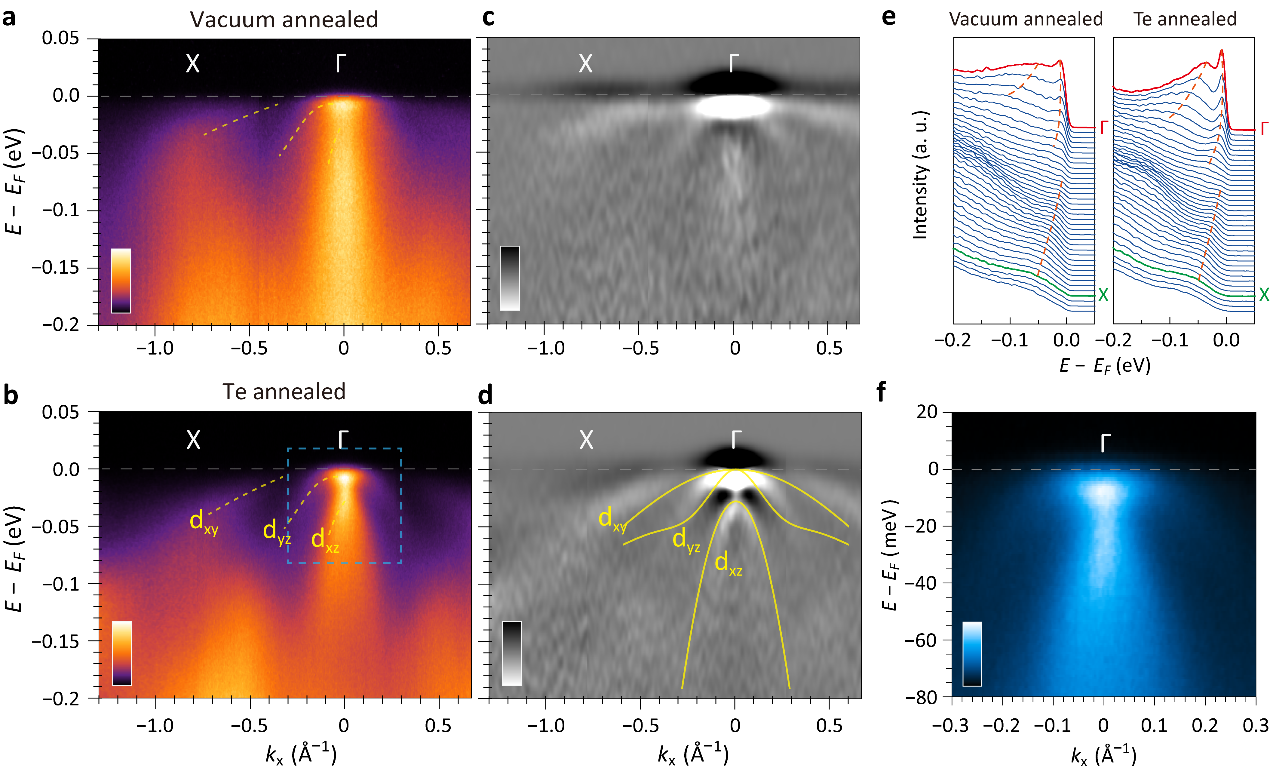
Figure 2. Electronic structure evolution of 10-layer FeTe thin films.
Transport measurements further verified the existence of this intrinsic superconductivity: after annealing, the sample exhibited a clear superconducting transition with a maximum transition temperature of 11.4 K, and typical Berezinskii-Kosterlitz-Thouless (BKT) transition behavior for two-dimensional superconductors was observed. Upon re-introducing interstitial iron via vacuum annealing, the superconducting state could be completely suppressed, once again demonstrating the pivotal regulatory role of stoichiometry.
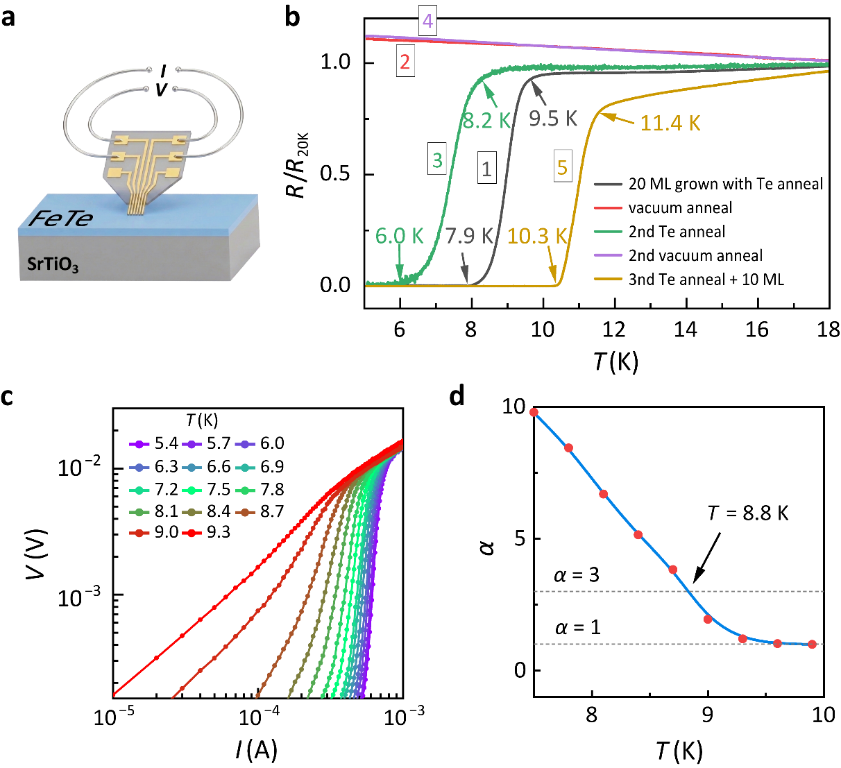
Figure 3. In-situ reversible tuning transport results of the superconducting state in FeTe thin films.
The study reveals the interplay among stoichiometry, strain, and magnetism in strained FeTe thin films, resolving a long-standing puzzle regarding the mechanism of FeTe superconductivity: high-purity strained FeTe thin films inherently possess intrinsic superconductivity, and a precise stoichiometry is a critical prerequisite for achieving this superconducting state. This research not only offers fresh insights into understanding the competitive relationship between magnetism and superconductivity in iron chalcogenides but also provides a reliable pathway for fabricating stable, high-purity superconducting FeTe thin films, laying a vital foundation for future mechanistic studies of iron-based superconductors and the construction of topological quantum devices.
Hao Xu and Jing Jiang are the co-first authors of the paper. Dr. Chong Liu, Dr. Kai Chang, and Dr. Dapeng Zhao from BAQIS, alongside Prof. Kai Liu from Renmin University of China, are the corresponding authors. Other co-authors include Xuesong Gai, Ruiqi Cao, Kaiwei Chen from BAQIS; Xiaoxiao Man from Shanxi Normal University; Prof. Zhong-Yi Lu from Renmin University of China; Dr. Haicheng Lin and Dr. Peng Deng from BAQIS; and Professor Ke He, an adjunct researcher at BAQIS and professor at Tsinghua University.
This work was supported by the National Science and Technology Major Project, the National Natural Science Foundation of China, the Beijing Natural Science Foundation, and projects from the Beijing Municipal Science & Technology Commission. The theoretical research portion was also supported by the National Key Research and Development Program of China.
Original Article Link:
https://pubs.acs.org/doi/10.1021/acsnano.6c05058